

Views: 0 Author: Site Editor Publish Time: 2026-01-26 Origin: Site


You use an industrial sewer camera to see inside pipes and drains. This tool helps you find problems like clogs or cracks without digging. Many workers use sewer camera inspection to keep plumbing safe and working right. Some cameras, like the QYTeco QY6688, show clear pictures and work well for hard jobs. If you want to choose well, you should learn about features, benefits, and prices.
Industrial cameras can be used in tough places.
You get better results if you use the right tools.
Sewer cameras let you look inside pipes without digging. This saves time and lowers costs. High-resolution images from sewer cameras help you find small problems early. You can spot cracks and blockages before they get worse. Picking the right camera features, like cable length and lighting, makes inspections better. Regular checks with sewer cameras can stop expensive repairs. They also help keep the system safe. Buying good sewer cameras can save money over time. It also helps you take better care of the pipes.
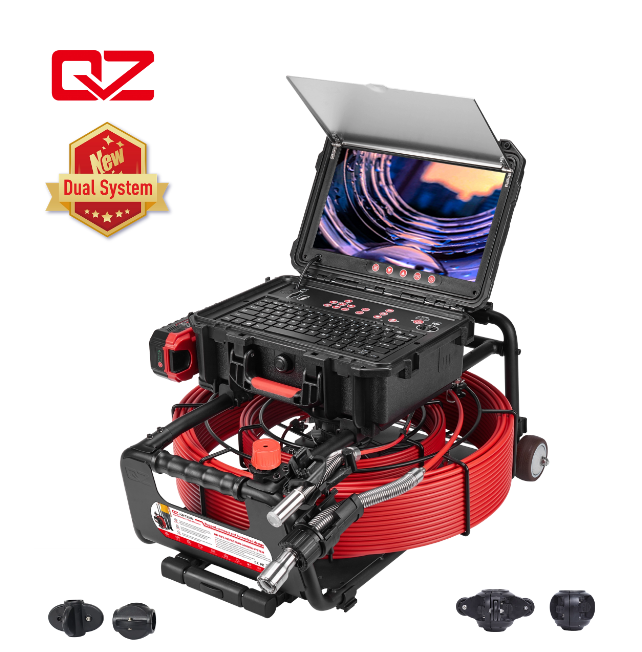
Sewer inspection cameras help you see inside pipes. You do not need to dig to use them. These tools find problems like clogs, cracks, or roots. Many jobs use sewer inspection cameras. Septic workers, city crews, and plumbers use them. You can check pipes often or fix emergencies. They also help you make sure repairs worked.
Here is a table showing common uses for sewer inspection cameras:
Application Type | Description |
|---|---|
Preventive Maintenance | Regular checks help you find issues early. |
Root Intrusion Management | You can spot and handle tree roots in pipes. |
Structural Damage Assessment | You look for cracks or other pipe damage. |
Post-Repair Verification | You check if repairs are done and no new issues. |
Regulatory Compliance | You follow rules for checking and fixing sewer systems. |
Sewer inspection cameras help stop sewer spills. They also help during emergencies. These cameras keep workers safe and stop extra digging.
Sewer inspection cameras use special technology to show inside pipes. You put the camera in through a manhole or other opening. The camera moves through the pipe on a bendy cable or robot. It sends live video to a screen above ground. You watch the pipe’s inside as it happens.
The main parts of a sewer camera system are:
Component | Function |
|---|---|
Push Rod | A bendy cable helps the camera move inside pipes. |
Camera Head | It has the lens and lights. It works in wet places. |
512Hz Sonde Transmitter | Sends signals so you can find the camera from above. |
Control Unit | Shows and saves the video for you to look at later. |
LED Lights | Lights up pipes so you can see better. |
Sapphire Lens | Stays clear and does not scratch easily. |
Self-Leveling Camera Head | Keeps the video straight so it is easy to watch. |
Pan-and-Tilt Camera Head | Lets you look around without moving the whole camera. |
High-Definition Cameras | Gives sharp pictures so you can see small problems. |
Rechargeable Battery | Powers the camera system anywhere, even without a plug. |
Sewer inspection cameras use good pictures and bright lights. They help you see inside pipes and find problems. You can plan repairs with these cameras. This saves time and money. You do not need to dig as much. Inspections are safer and more exact.
You should check important features before picking a sewer inspection camera. These features help you see clear pictures and reach deep pipes. They also let you work in tough places. Sewer cameras are used for pipe checks, manhole checks, and cctv surveys. Here are the main features to think about.
A high-resolution camera is best for pipe inspection. Clear pictures help you find cracks and blockages.
High-resolution images make it easier to see problems. This helps people and AI systems spot defects. Good pictures help you find issues fast. AI can learn to use different image types.
Most sewer cameras have screens from 9 to 13.3 inches. The QYTeco QY6688 has a big 13.3-inch screen and sharp resolution. You can see small details easily.
Here is a table with common screen sizes:
Screen Size | Description |
|---|---|
9 inches | This size is common and shows clear pictures. |
13.3 inches | Bigger screens help you see better and spot problems. |
A bigger screen helps you work faster. It also makes your eyes less tired. Articulating cameras with high resolution help you check pipes better.
Good lighting is needed for sewer pipe cameras. Bright LEDs help you see inside dark pipes. The QYTeco QY6688 has 12 strong LEDs. This gives clear pictures in wet and tight spaces.
Here are some lighting and zoom features:
Feature | Description |
|---|---|
Lighting Capability | Up to 4000 lumens lights up dark pipes. |
Adaptability | You can change light modules for different jobs. |
Lighting Output | Strong LEDs give more light than other cameras. |
Visibility Improvement | Better light helps you see in dirty pipes. |
Zoom Capability | 360X zoom lets you look at defects closely. |
Illumination | Special lights make it easier to see inside pipes. |
The QY6688 camera has 8x zoom, which is more than most.
The General Pipe Cleaners SL-GXP-F X-Pod Plus Sewer Camera has 4X zoom for close looks.
Articulating cameras with good lights and zoom help you check hard spots. Flexible sewer cameras with bright lights help you find problems fast.
Cable length decides how far you can check pipes. Pick a sewer camera with the right cable for your job.
Here is a table with cable length types:
Cable Length Category | Length Range (Feet) | Typical Applications |
|---|---|---|
Short - Range Cameras | 25 - 100 | Used for home plumbing and short ducts |
Medium - Range Cameras | 100 - 300 | Used for business pipes and city sewers |
Long - Range Cameras | 300+ | Used for big jobs and deep pipes |

Flexible sewer cameras have cables that bend easily.
The spring core lets the sonde bend without the push rod.
This helps the camera go around corners and bends.
The flexible shaft moves through tricky pipes and junctions.
Rigid cables cannot reach some spots, but flexible ones can.
Flexible cables clean pipes better and stop blockages.
Articulating cameras with bendy cables help you check pipes with lots of turns. You can use sewer cameras for both straight and curved pipes.
Sewer cameras must work in wet and dirty places. Strong and waterproof cameras last longer.
An IP68 rating means the camera works in wastewater.
IP68 keeps the camera safe from dust and water.
Materials like stainless steel or tough plastic stop rust.
The camera case should be strong to handle hits and chemicals.
Cameras need to be tough for hard sewer jobs.
Water resistance is important, so look for IP68 rating.
The QYTeco QY6688 camera uses strong materials and is waterproof. You can use it in wet places without worry. Articulating cameras with waterproof ratings work better and last longer.
Self-leveling keeps the camera image upright. You do not need to fix the view, even in bent pipes.
Self-leveling keeps pictures straight and helps you work faster.
You can find problems quicker with clear images.
It is easier to spot cracks and blockages in tricky pipes.
Self-leveling cameras keep the picture upright in bends.
This helps you find defects without getting confused.
Water shows up at the bottom of the screen, so you can spot problems.
Frequency options help you find the camera underground.
Frequency (Hz) | Communication Range in Sewer Pipes |
|---|---|
512 | Works well through dirt and pipes underground |
2.4/5 GHz | Goes 10 meters in a 200 mm pipe |
920 MHz | Shorter range in small pipes |
The 512Hz transmitter sends a signal at 512Hz.
This signal travels through dirt and pipes.
It helps you find where the camera is.
The QYTeco QY6688 camera has self-leveling and a 512Hz option. These features help you check pipes and find the camera head easily.
You need sewer cameras that fit different pipe sizes and places. The QYTeco QY6688 has a 29mm camera head for many pipe sizes. Articulating cameras work in small and big pipes. Flexible sewer cameras help you check pipes with bends.
QYTeco lets you customize your camera. You can get cameras with features you need. Articulating cameras with custom parts help you work faster and safer.
When picking a sewer camera, look for high resolution, strong lights, bendy cables, waterproof ratings, self-leveling, and frequency options. These features help you do better pipe checks, cctv surveys, and manhole checks. Articulating and flexible cameras work for many jobs. Strong and waterproof cameras last longer and work in tough places.
You get many good things when you use sewer cameras for pipe checks. These tools help you work faster and safer. You can find problems early and save money on fixing pipes. Portable inspection systems make your job easier at factories or homes.
Sewer cameras show clear pictures inside pipes. High-resolution imaging helps you see small cracks, roots, and rust. You can use new inspection technology to find hidden problems that old tools miss. Self-leveling keeps the picture straight, so twisted pipes do not confuse you.
Here is a table that shows how high-resolution sewer cameras help you find problems better:
Improvement Type | Description |
|---|---|
Detection of hidden issues | Thermal imaging finds water leaks not visible to standard drain cameras. |
Early signs of deterioration | High-resolution cameras spot pipe wear before it gets worse. |
Structural weaknesses | Advanced imaging reveals weak spots in pipes. |
Corrosion detection | You see corrosion before it causes big damage. |
Non-destructive testing | You check pipes without digging them up. |
Quantitative data | You get numbers to help plan repairs and upgrades. |
Enhanced imaging quality | 4K resolution shows tiny cracks and roots. |
Wide-angle views | You see more of the pipe in one shot. |
Zoom capabilities | You look closely at problem areas. |
Waterproof designs | Cameras work even when pipes are full of water. |
You do not have to guess what is wrong. Sewer cameras give you real-time pictures. This inspection technology helps you avoid mistakes and extra repairs. You see the real problem, so you can fix it right away.
You save time when you use portable inspection systems. New sewer cameras let you finish checks much faster than old ways. You do not need to dig up pipes or send workers underground for a long time. You can check more manholes and pipes each day.
Modern sewer cameras can make inspections up to 75% faster.
You spend about 60 minutes on each check, not 4 hours.
You can check 8 to 12 manholes a day, not just 2 or 3.
Each week, you can check over 200 manholes with new inspection technology.
Portable inspection systems let you move fast from place to place. Drain cameras give you live video, so you spot problems in minutes. You do not waste time digging or guessing.
Here is a table that shows how portable inspection systems help your team:
Benefit | Description |
|---|---|
Accurate visual diagnosis | Clear images help you assess pipe conditions fast. |
Improved safety | You avoid risky digging and keep workers safe. |
Time-saving | You finish inspections in hours, not days. |
Cost reduction | You spend less on labor and equipment. |
You keep your team safe when you use sewer cameras for checks. Workers do not need to go into dangerous places or dig up pipes. Remote inspections keep everyone out of danger. AI-powered inspection technology also helps you find hazards before they become emergencies.
You lower the chance of accidents and being around harmful stuff. Portable inspection systems let you check pipes from far away. You use drain cameras to see inside pipes without sending anyone underground.
You save money with sewer cameras. You do not need to pay for big digging jobs or large crews. Portable inspection systems help you find problems early, so you avoid expensive emergencies. Regular checks with drain cameras stop big repairs and keep your system working well.
Sewer cameras give you live views of pipes underground, so you do not need to dig.
You find blockages and damage without sending people in, saving time and money.
Regular checks help you catch problems before they get worse.
You can cut your maintenance costs by about 30% with sewer cameras. You also have less downtime, so there are fewer surprises and lower costs. Companies that use industrial inspection technology protect their money and keep things running well.
Tip: Regular checks with portable inspection systems help you avoid surprise repairs and keep your pipes in good shape.
Sewer camera systems cost different amounts. Some are cheap and some are expensive. Basic models for homes start at $100. They can go up to $600. These are good for simple jobs. Cameras for businesses and factories cost more. They have extra features for hard work. The table below shows how much different systems cost:
System Type | Price Range (AUD) | Typical Applications |
|---|---|---|
Entry-Level Push Cameras | $7,500–20,000 | Residential, Small Commercial |
Mid-Range Systems | $20,000–55,000 | Commercial, Light Industrial |
Professional Crawlers | $55,000–140,000 | Municipal, Large Industrial |
Complete Truck Systems | $140,000+ | Major Infrastructure |
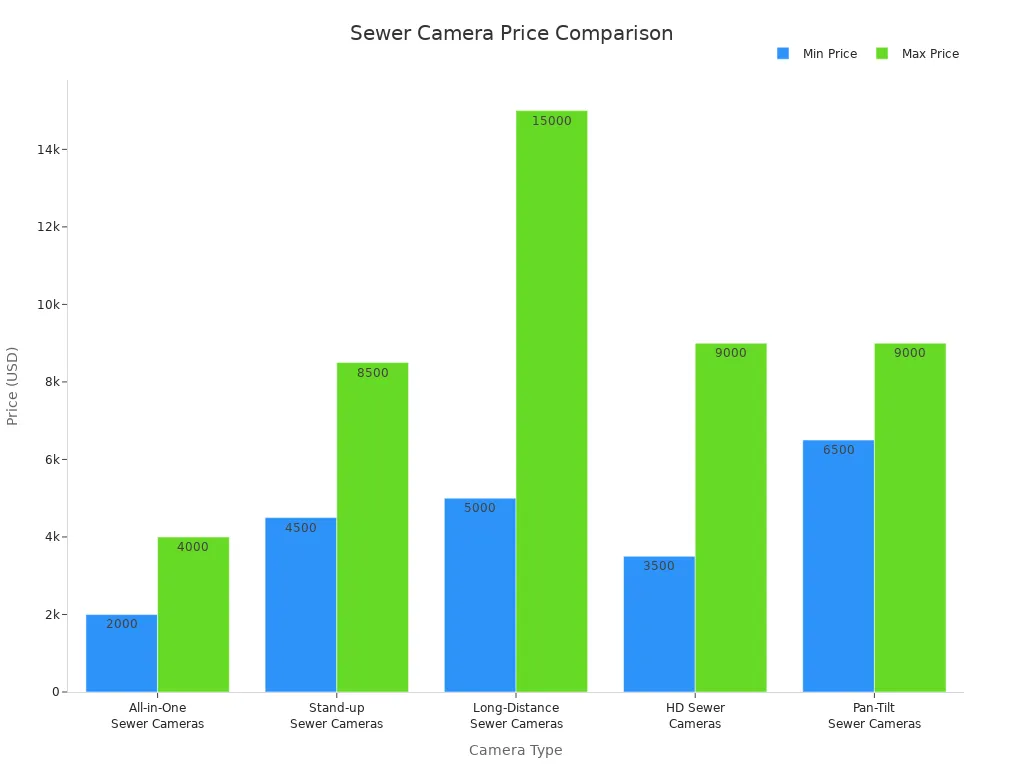
You can look at camera types and their prices too:
Camera Type | Price Range |
|---|---|
All-in-One Sewer Cameras | $2,000–$4,000 |
Stand-up Sewer Cameras | $4,500–$8,500+ |
Long-Distance Sewer Cameras | $5,000–$15,000+ |
HD Sewer Cameras | $3,500–$9,000+ |
Pan-Tilt Sewer Cameras | $6,500–$9,000+ |
Many things change how much a sewer camera costs. You should think about these before you buy:
Long pipes or pipes that are hard to reach cost more. You need special tools for those jobs.
Better inspection equipment costs more money. Simple cameras are cheaper than professional ones.
Where you live can change the price. Local rules and worker pay matter.
Pipes with lots of bends or branches need special features. This can make the price go up.
You can add custom things like your logo or special packaging. These options change the price.
Note: QYTeco lets you order custom cameras. You can get special features for your business or factory.
You want a sewer camera that is worth your money. Good features help you finish work faster and make fewer mistakes. This saves you money in the long run.
The QYTeco QY6688 is special. It has a big 13.3-inch screen and sharp pictures. It is strong and works for many jobs. The table below compares QYTeco QY6688 with other top brands:
Product Name | Review Score | Price Range | Screen Size | Key Attributes |
|---|---|---|---|---|
QYTeco QY6688 Sewer Camera | 4.8 | $2,127–2,278 | 13.3" | 6.8mm reel, 29mm head |
50M Self-Leveling Sewer Camera | 4.8 | $250–280 | 9" HD | 12 lights, DVR, IP68 |
20M 5mm Sewer Pipe Inspection Cam | 4.4 | $204–240 | 7" | 23mm endoscope, 16GB card |
You can get more value by picking the right camera for your job. Custom features help you work better. Over time, you save money on repairs and labor.
You should start by thinking about your inspection goals. Do you need to check home plumbing, city sewers, or factory drains? Write down the types of pipes you work with most. If you inspect manholes or long pipelines, you need a camera that can reach deep and handle tough conditions. Ask yourself if you need to see small cracks or just find blockages. Your answers help you pick the right tool.
Tip: Make a checklist of your most common inspection jobs. This helps you match features to your needs.
Pipe diameter matters when you choose a sewer camera. Small pipes need a slim camera head. Big pipes need a larger, stronger camera. The QYTeco QY6688 has a 29mm camera head, which fits many pipe sizes. You should measure your pipes before you buy. Use the table below to match camera head size to pipe diameter:
Pipe Diameter (mm) | Recommended Camera Head Size (mm) |
|---|---|
30–50 | 17–23 |
50–100 | 23–29 |
100+ | 29+ |
Flexible cables help you reach bends and junctions. If you work in places with lots of turns, choose a camera with a bendable shaft.
You need to balance features and cost. Advanced features like HD video, self-leveling, and strong LED lights help you find problems faster. If you work for a city or a big company, these features save time and money. Portable cameras make it easy to move between job sites. Custom options let you add special parts for your work.
Make a list of must-have features.
Compare prices for cameras with those features.
Think about long-term savings from fewer repairs and faster inspections.
Note: Investing in a camera with advanced features can improve your inspection results and reduce downtime.
Choosing the right sewer camera helps you work smarter and safer. Match your needs, pipe size, and budget for the best results.
You need to match features and price to your inspection needs when choosing a sewer camera. Advanced models, such as the QYTeco QY6688, give you clear images and strong performance for tough jobs. Use the tips in this guide to help you pick the best camera for your work. Smart choices lead to better results and long-term savings.
A sewer camera lets you see inside pipes and drains. You can find clogs, cracks, or other problems fast. You do not need to dig up the ground. Many workers use this tool for careful checks.
Pipeline inspection cameras help you find problems early. You can see leaks, blockages, or damage before they get worse. This means you can fix things quickly and save money. Finding problems early keeps your system safe.
Clear images help you spot small things inside pipes. You can see cracks, roots, or rust better. Sharp pictures help you make good choices. Good image clarity helps you find hidden problems during checks.
Portable sewer inspection cameras are easy to move around. You can finish plumbing jobs faster at different places. These cameras help you save time and spend less on work. You get good results wherever you go.
Professional cctv sewer cameras show live video of pipes. You can check for damage or blockages right away. These cameras help you do regular sewer checks. You keep your system working well and stop emergencies.


