

Views: 0 Author: Site Editor Publish Time: 2026-01-12 Origin: Site


Misdiagnosing a plumbing issue hits your wallet hard. Imagine paying thousands to excavate your front yard for a suspected pipe collapse, only to discover a simple grease clog that a standard snake could have cleared. Conversely, ignoring a structural failure because you assumed it was just a routine blockage leads to repeated backups, raw sewage leaks, and extensive water damage. This costly confusion often stems from using the wrong diagnostic tool at the start.
While the terms are often used interchangeably by laypeople, sewer drain cameras actually refer to two distinct classes of equipment designed for very different pipe environments. Using a tool meant for a kitchen sink to inspect a municipal lateral is a recipe for frustration and poor data. This guide compares hardware capabilities, diagnostic limitations, and specific use cases to help homeowners and professionals choose the right inspection method.
Scope & Scale: Drain cameras handle interior "branches" (1.5"–3" lines); Sewer cameras handle the main "trunk" (4"–12"+ lines).
Rigidity Rule: Drain cables are flexible to navigate tight P-traps; Sewer push rods are stiff to travel 200ft+ without kinking.
Visibility Reality: Cameras cannot see through opaque sewage; lines must be drained or jetted before inspection for accurate diagnostics.
Investment Trigger: Rent/Buy a drain camera for recurring indoor clogs; Hire a pro with a sewer camera for structural inspections (roots, belly, collapse).
To understand the hardware, you must first understand the plumbing architecture. Think of a residential plumbing system like a tree. The "branches" are the smaller lines inside the house, while the "trunk" is the massive line running out to the street. Each requires a specialized approach.
Drain cameras operate primarily within the interior plumbing of a building. These devices target the chaotic network of kitchen sinks, bathtubs, and laundry lines. The pipes here are narrow, typically ranging from 1.5 inches to 3 inches in diameter.
The defining characteristic of a drain camera is its navigation logic. To function effectively, the cable must be highly flexible. It needs to snake through tight P-traps under sinks and negotiate sharp 90-degree elbows hidden behind drywall. If the cable were too stiff, it would simply jam at the first turn.
Sewer cameras are built for the exterior lateral line—the critical connector between a home and the municipal main or septic tank. These environments are larger, usually involving 4-inch, 6-inch, or even wider mains.
Unlike their interior counterparts, sewer cameras rely on a semi-rigid push rod. This stiffness is intentional. To inspect a line that runs 100 feet or more out to the street, the operator must exert force from the reel. A flexible cable would buckle and coil upon itself (a phenomenon known as "bird-nesting") long before reaching the problem area. The rigid rod transfers energy efficiently, allowing the camera head to travel great distances.
Homeowners often wonder if one camera can do it all. The answer is generally no. A drain camera pushed into a main sewer line will likely coil up uselessly because it lacks the stiffness to push through sludge. Conversely, a sewer camera is far too thick and rigid to make the tight turn of a bathroom sink drain. Attempting to force it can crack the porcelain fixture or damage the camera head.
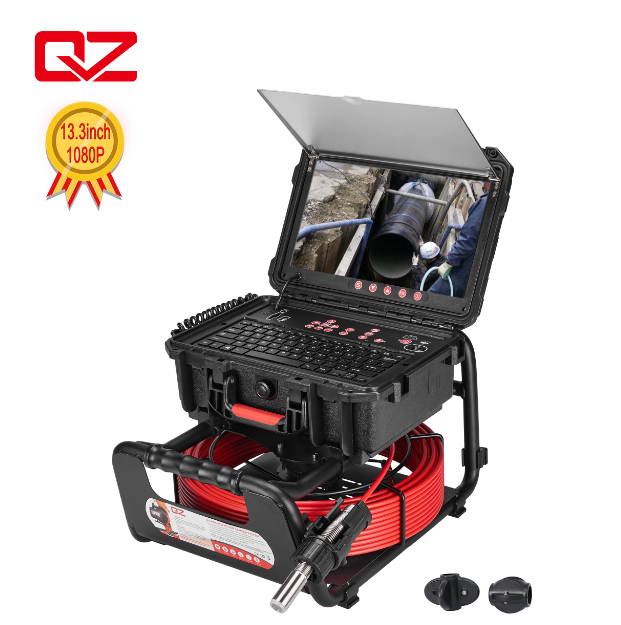
When you look under the hood, the engineering differences become obvious. Manufacturers build these tools to survive specific hostile environments.
| Feature | Drain Camera | Sewer Camera |
|---|---|---|
| Optimal Pipe Size | 1.5" – 3" | 4" – 12"+ |
| Cable Flexibility | High Flex (Navigates traps) | Stiff / Rigid (Resists buckling) |
| Typical Reach | 25 – 100 ft | 100 – 300+ ft |
| Lighting Tech | Macro / Close-range | High-Lumen Flood |
Reach is the most visible differentiator. Drain cameras typically max out between 25 and 100 feet, which is sufficient for reaching the main stack from a bathroom. In contrast, professionals dealing with long driveways or commercial setbacks require significantly more range. Sewer cameras 200ft in length are the industry standard for residential work, covering most suburban property lines. For larger estates or municipal cross-checks, 300 ft sewer cameras are often necessary.
Beyond length, the material matters. Sewer cables often use a fiberglass-reinforced core. This provides enough column strength to push through heavy sludge and minor root balls without kinking.
The environment inside a 6-inch pipe is vastly different from a 2-inch pipe, and the camera optics must adapt.
Self-Leveling: Inside a large sewer pipe, it is easy to lose track of orientation. A self-leveling head ensures the image on the monitor stays upright ("up is up"). This is critical for diagnosing bellies (sags) in the line. Budget drain cameras rarely have this, as orientation in a small vertical pipe is less confusing.
Lighting: A large sewer main is a massive dark void. Sewer units require high-lumen LED arrays to illuminate the pipe walls effectively. Drain cameras focus on close-range macro clarity to identify small obstructions like jewelry or hair.
Durability: Sewer cameras face harsh conditions, including scraping against concrete and clay. High-end units utilize Sapphire glass lenses to resist scratching, maintaining a clear picture over years of abuse.
Seeing a crack on a screen is useless if you don't know where to dig. Professional sewer units contain a built-in transmitter called a "sonde," which typically broadcasts a 512Hz signal. A technician walks above ground with a receiver to pinpoint the exact location and depth of the camera head. This feature transforms a video inspection into an actionable repair plan, minimizing the amount of yard that needs to be excavated.
Choosing the right tool depends entirely on the symptoms you are experiencing. Using a sledgehammer to crack a nut is inefficient; using a drain camera to find a main line collapse is impossible.
If only one toilet is acting up, or the kitchen sink drains slowly while the rest of the house flows fine, the issue is local. A drain camera is the correct tool here. It excels at identifying:
Soft Blockages: Accumulations of hair, soap scum, and grease.
Foreign Objects: Accidental losses like wedding rings, children's toys, or utensils stuck in the P-trap.
Verification: Confirming that a snaking or hydro-jetting job successfully cleared the interior line.
When multiple drains back up simultaneously, or water pools in the basement floor drain, the issue lies in the main trunk. This requires the reach and lighting of a sewer camera to detect structural failures:
Tree Root Intrusion: Roots seek moisture and can invade microscopic joints in clay or cast iron pipes. A sewer camera reveals these "root curtains."
Bellies (Sags): If the ground settles, a section of the pipe may dip, creating a reservoir for standing water and waste. This eventually leads to a permanent blockage.
Pipe Collapse/Cracks: Old fiber conduit ("Orangeburg") pipes deform under pressure, while cast iron can rust through. A camera distinguishes between a dirty pipe and a broken one.
A critical industry insight is that grease and scale often mimic structural damage. On a monitor, a streak of hardened grease can look exactly like a "zipper crack" running down the pipe. This leads to many unnecessary pipe replacements.
Critical Protocol: A camera is an inspection tool, not a cleaning tool. If a line is filled with dirty water, visibility is zero. The correct sequence is always Clean -> Inspect. Never authorize a major repair based on a murky video; demand the line be descaled or jetted first so the camera sees the actual pipe wall.
Deciding how to access this technology depends on your role and the frequency of the problem.
Most homeowners are better off hiring a professional service. You might be tempted to search for sewer cameras near me to find a rental, but interpreting the footage takes experience. You should hire a pro for:
Pre-purchase inspections: Never buy a home built before 1980 without checking the lateral.
Persistent backups: If cabling the line doesn't solve it, you need eyes underground.
Large trees: If you have massive oaks near your sewer line, annual inspections are preventative maintenance.
When to Rent: If you are handy and suspect a specific object (like a toy) is stuck in an accessible cleanout, renting a small drain camera can save money.
For plumbers, facility managers, and contractors, owning the gear improves ROI by eliminating sub-contractor fees. When browsing sewer cameras for sale, use this evaluation checklist:
Modular Capability: Can the reel head be swapped? If the camera breaks, you don't want to ship the entire unit away.
Digital Reporting: Modern clients expect transparency. Look for systems with Wi-Fi or Cloud capabilities to share footage instantly.
Distance Counter: An on-screen footage counter is mandatory. You cannot bid a repair accurately if you don't know if the break is at 40 feet or 45 feet.
ROI Calculation: Compare the cost of "guessing and digging"—which ruins labor margins—against the upfront investment of a reliable system. A single saved excavation error often pays for the camera.
While powerful, these cameras are not magic wands. Understanding their blind spots prevents unrealistic expectations.
A common misconception is that a camera can "see" a leak. It cannot. Cameras see gaps, cracks, and disjointed sections. We infer a leak exists because we see a hole, but the camera cannot visualize water escaping into the soil. For absolute confirmation of a leak, especially in insurance claims, hydrostatic isolation testing is required alongside the video evidence.
Cameras operate visually. If the sewer line is fully backed up with standing water, the camera lens will only show "churned up soup." The light reflects off suspended particles, creating a wall of fog. In this scenario, the camera cannot diagnose the cause of the blockage.
The Locator Workaround: However, even in zero visibility, professionals can still use the camera head’s sonde signal. By pushing the camera until it hits the stoppage, they can use the locator above ground to mark the spot. This is a "blind locate"—they don't know what caused the problem, but they know exactly where to dig to fix it.
The difference between a sewer camera and a drain camera is not just semantics; it is a matter of physics and application. Drain cameras are the flexible specialists for the tight turns of indoor plumbing, while sewer cameras are the rigid, long-range workhorses for exterior lateral lines. Attempting to swap their roles leads to damaged equipment and missed diagnoses.
Remember that a camera inspection is only as reliable as the cleanliness of the pipe. Grease, scale, and sludge can hide cracks or mimic them. Always insist on descaling or hydro-jetting the line before making expensive pipe-replacement decisions based on video footage.
If you own a home built before 1980, or if you are in the final stages of a real estate transaction, do not rely on guesswork. Schedule a professional inspection with the correct equipment to ensure the "trunk" of your plumbing system is sound.
A: Generally, no. Cheap USB endoscopes lack the rigidity to be pushed more than a few feet into a pipe. They curl up immediately upon hitting resistance. Furthermore, their lighting is usually insufficient for dark, wet environments, and they lack the self-leveling features needed to understand what you are looking at.
A: Not directly. A sewer camera shows visual damage like cracks, separated joints, or holes. While these indicate where water could be leaving the pipe, the camera does not show the water leaking out. Active leak detection requires hydrostatic pressure testing.
A: This usually happens because the line is backed up with dirty water. Cameras cannot see through opaque, sewage-filled water. The line must be drained or hydro-jetted to lower the water level and clear the debris before a clear video inspection is possible.
A: Yes. Most residential sewer laterals (the line from the house to the street) are under 100 feet long. A 200ft cable provides a safe buffer for homes with long setbacks or for inspecting lines from difficult access points, such as roof vents.
A: A professional inspection typically costs between $250 and $500. Buying a high-quality sewer camera system starts around $600 for entry-level units and goes up to $3,000+ for professional models with sondes and self-leveling heads. For a one-time issue, hiring is cheaper; for pros, buying is essential.


