

Views: 0 Author: Site Editor Publish Time: 2026-01-14 Origin: Site


Nothing causes homeowner anxiety quite like the gurgling sound of a backing-up toilet or the sudden appearance of slow drains throughout a property. Whether you are dealing with recurring foul odors or navigating the high-stakes inspection period of a real estate transaction, the uncertainty of underground plumbing issues is stressful. In these moments, sewer drain cameras serve as the primary diagnostic line of defense. They are not magic wands that fix problems instantly, but they are sophisticated fiber-optic tools designed to provide hard visual data from inside your pipes.
However, there is a core conflict between what homeowners expect these cameras to do and the reality of the technology. A common misconception is that a camera can "see water leaking" out of a pipe. In reality, the camera lens is inside the pipe, while the leak occurs outside in the soil. The camera sees the cause of the failure, not the leak itself. Understanding this distinction is crucial. A proper inspection moves you from a state of "guessing and snaking" blindly to "diagnosing and solving" the root problem effectively.
Visuals vs. Physics: Cameras detect structural failures (cracks, offsets) and obstructions, but they cannot visually "see" water escaping the pipe into the soil.
The "Clean First" Rule: A dirty pipe hides the truth; professional diagnostics often require hydro-jetting before the camera run to distinguish between scale buildup and actual cracks.
Equipment Tiers Matter: Consumer-grade sewer cameras for sale differ vastly from professional systems regarding image clarity, self-leveling heads, and locating capabilities (sondes).
Risk Mitigation: The inspection is the only way to avoid paying for unnecessary "full line replacements" or inheriting a collapsed line during a home purchase.
Homeowners often call professionals because they face a recurring business problem: repeated stoppages. The drain backs up, you pay to have it cleared, and three weeks later, it backs up again. The critical question a camera answers is whether the issue is temporary (a soft clog) or permanent (structural breakage). The camera provides visual confirmation of the following physical realities.
Tree roots are the most common enemy of sewer lines, particularly in older clay or cast iron systems. They seek moisture and enter through the smallest imperfections. A camera inspection allows you to distinguish between two specific severity levels:
Hairline Entry: Fine, spiderweb-like roots entering through a joint. This typically indicates the pipe structure is intact but the joint seal has failed. This is often manageable with chemical treatments or routine mechanical cleaning.
Root Curtains and Impactions: Dense masses of roots that fill the entire diameter of the pipe. The camera can reveal if the roots have grown thick enough to shatter the pipe hub or offset the joint. If the joint is shattered, chemical treatment will fail; excavation or lining is required.
Beyond roots, the physical alignment of the pipe determines its ability to carry waste. Soil shifting and settling over decades can wreak havoc on underground infrastructure. Cameras are excellent at identifying:
Offsets (Misalignments): This occurs when two sections of pipe are no longer perfectly connected. One section has dropped lower than the other, creating a "lip." This lip catches toilet paper and solid waste, eventually causing a blockage.
Bellies (Sags): A belly is a low spot in the line where water pools because the pipe has lost its proper slope. Cameras will show the lens going underwater and staying submerged for several feet. These sags act as grease traps, leading to chronic soft blockages.
Collapse or Crushed Pipes: In the worst-case scenario, the camera reveals a catastrophic failure where the pipe has caved in completely. This confirms that snaking will never solve the problem and excavation is unavoidable.
Finally, a camera provides definitive confirmation of the pipe material. Knowing if you have Cast Iron, Clay, PVC, or the notorious Orangeburg pipe is vital. This identification determines the remaining lifespan of the system and dictates which repair methods (like pipe lining) are viable.
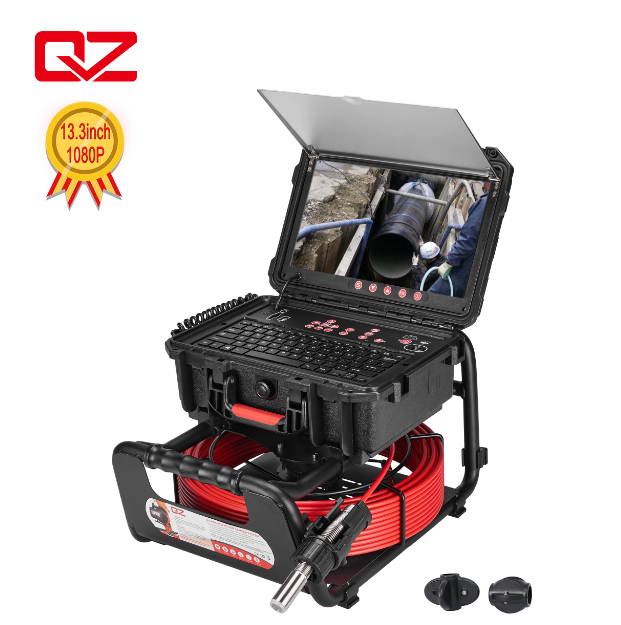
It is important to manage expectations regarding leaks. If you suspect sewage is leaking into your yard or under your foundation, a camera alone cannot prove it. We must understand the physical limitation of the technology: the camera is located inside the pipe looking at the interior wall. It cannot see the soil outside the pipe to confirm if the earth is saturated.
Professional diagnostics rely on distinguishing between a breach and a leak. The camera identifies the breach—the visual evidence of a crack, hole, or separated joint. It confirms the potential for a leak exists. However, it does not quantify the leak itself, which is the volume of water escaping.
For example, a crack on the top of a pipe may technically be a breach, but it might not leak significantly unless the pipe is running full. Conversely, a small fracture at the bottom of the pipe will leak constantly. To definitively prove a leak, especially for insurance claims, secondary testing like isolation testing or hydrostatic pressure tests is often required alongside the video evidence.
Interpreting camera footage requires expertise because the inside of a sewer line is a hostile visual environment. Several factors can lead to false positives:
Grease and Scale: In cast iron pipes, jagged rust and grease buildup can look exactly like a "channel rot" crack (where the bottom of the pipe is missing). Without cleaning, it is impossible to tell the difference.
Cobwebs: Surprisingly, spiderwebs inside a dry pipe can look remarkably like cracks on a monitor. Inexperienced operators often misdiagnose these as structural fractures.
This highlights the absolute necessity of cleaning. An inspection performed on a dirty pipe often yields void results. If the lens is smeared with grease or the pipe walls are covered in sludge, the diagnostic value drops to near zero.
With the rise of affordable technology, many homeowners and handymen consider buying their own equipment. A quick search for sewer cameras for sale reveals a wide range of options, from inexpensive consumer units to high-end industrial systems. Understanding the difference is critical for decision-making.
The gap between a $300 unit and a $3,000 unit is not just about durability; it is about diagnostic capability. The following table breaks down why professional features matter for accurate results.
| Feature | Consumer/DIY Unit | Professional Industrial Unit | Impact on Diagnosis |
|---|---|---|---|
| Self-Leveling Head | Rarely included. Image spins as cable twists. | Standard. Image stays upright. | Critical for orientation. Without it, you cannot tell if a crack is on the top (safe) or bottom (leaking) of the pipe. |
| Sonde (Locating) | Usually absent. | Built-in transmitter (512Hz). | Allows you to pinpoint the camera head's location above ground. Without this, you see the problem but don't know where to dig. |
| Push-Rod Stiffness | Flexible, prone to kinking. | Rigid core, navigates 100ft+ runs. | Cheap rods curl inside a 4-inch line or fail to push past minor sludge, preventing a full inspection. |
When evaluating the Total Cost of Ownership, buying a cheap camera often carries hidden risks. The upfront cost might seem low, but the tool is typically used once every five to ten years by a standard homeowner. More importantly, there is a physical risk: consumer-grade push rods lack the tensile strength of professional gear. If a head gets stuck in a collapsed line or caught on a root ball, you may face an expensive retrieval bill that exceeds the cost of a professional inspection.
For most homeowners, hiring a professional offers a better value proposition. You pay a one-time fee for an expert diagnosis and, crucially, liability protection if the equipment fails inside the pipe. However, for multi-property owners or maintenance handymen, investing in mid-range gear can make sense for quick blockage checks.
Unfortunately, the plumbing industry is not immune to unethical sales tactics. Some service providers use grainy camera footage to terrify homeowners into agreeing to unnecessary whole-home repiping. When you search for sewer cameras near me, you need to be prepared to interpret the results with skepticism.
One common tactic involves misidentifying scale as rot. Cast iron pipes naturally develop "tuberculation," which is a bumpy, rust-colored texture on the interior. This is a sign of normal aging, not necessarily structural failure. An unscrupulous plumber might point to this rough surface and claim the pipe is "rotten through," demanding immediate replacement.
To defend against this, you must adopt the "Jetting Mandate." Advise any technician that you will not accept a "condemned pipe" diagnosis unless they have first hydro-jetted the line. Jetting removes the scale and sludge, exposing the actual pipe wall. If the wall is intact beneath the rust, the pipe can often be saved. If the jetting reveals holes, then the diagnosis is valid.
When looking for local providers, ask two specific questions before booking: "Do you record the footage for me to keep?" and "Do you have locating capability?" A provider who refuses to share the video file is a major red flag. Furthermore, be wary of "Free Camera Inspections." These are frequently used solely as sales lead generators for expensive repairs. A paid, independent inspection usually yields more unbiased data.
Viewing a camera inspection as an expense is a mistake; it is an investment in risk mitigation. There are three specific scenarios where the Return on Investment (ROI) is undeniably positive.
Buying a home without a sewer scope is a financial gamble. The cost of an inspection typically ranges from $200 to $500. Contrast this with the cost of a full sewer replacement, which can run between $10,000 and $30,000 immediately after closing. Identifying a collapsed line before you sign the contract allows you to negotiate the repair price or walk away from the deal.
Before you pour a new concrete driveway or add a bathroom addition, you must know where your existing lines run. "Locating" is a process where the camera (with a sonde) is placed in the pipe, and a receiver marks the path above ground. This prevents the accidental destruction of your sewer line during excavation, which would halt your renovation and explode your budget.
Never pay the final invoice for a sewer repair until you have seen the "after" video. If a contractor claims to have cleared roots, the camera will verify they didn't just punch a small hole through them but actually removed the mass. If you had a pipe lined (CIPP), the camera ensures the liner cured smoothly without wrinkles or gaps. The camera is your quality assurance tool.
If damage is found during any of these scenarios, the immediate next step is Locating and Marking the spot above ground with paint or flags. Do not sign a repair contract immediately; use the location markers to get competitive bids.
Sewer drain cameras are indispensable tools for assessing the health of underground plumbing. While they cannot defy physics to see leaks through pipe walls, they provide the visual evidence of structural defects, roots, and blockages that cause those leaks. They transform a hidden, underground mystery into visible, actionable data.
However, the camera is only as good as the operator and the conditions in which it is used. High-quality lighting, self-leveling heads, and a strict "clean-first" approach are non-negotiable for accurate results. Whether you are buying a home or troubleshooting a chronic backup, rely on clear visuals rather than fear.
If you suspect issues with your line, we encourage you to book a paid, independent camera inspection. Getting unbiased data is the only way to make an informed decision before committing to expensive repairs.
A: Not directly. A camera can see cracks (breaches) in the pipe, but it cannot see water leaking into the soil. To confirm a leak under a slab, you typically need to combine the camera inspection with an isolation test or hydrostatic pressure test to verify that water is actually escaping the system.
A: It depends on the equipment. Standard residential push cameras typically have cables ranging from 100 to 200 feet, which is sufficient to reach the city main from most homes. Professional mainline crawlers used by municipalities can travel significantly further.
A: The camera itself sees visual images. To "locate" the pipe underground, the camera head must be equipped with a sonde (a radio transmitter). A technician walks above ground with a locator wand that detects the sonde's frequency, allowing them to map the pipe's depth and direction.
A: Generally, no. Cheap cameras often lack self-leveling heads (making image orientation impossible) and locating sondes. Without a sonde, you might find a break but won't know where to dig to fix it. They are also prone to kinking in 4-inch lines.
A: Only if the water is clear. If the sewer line is backed up with sewage, the camera will only see a cloud of murky water. The line must be drained or flushed with clear water to get a visible image.


