

Views: 0 Author: Site Editor Publish Time: 2026-11-22 Origin: Site


A sewer camera can reveal visible blockages, deposits, root intrusion, damaged pipe surfaces, displaced joints, deformation, and some water-related signs inside accessible pipes. What it can establish depends on image clarity, access, flow, and the position of the camera. It cannot see through opaque material or independently confirm every cause suggested by the footage.
A useful inspection therefore separates three questions: what is visible, what that observation may mean, and what still needs verification. This approach helps turn video into an actionable finding without overstating what a visual method can prove.
Key takeaways
Inspection can reveal visible obstructions and internal pipe defects in reached sections.
Water and deposits can hide the pipe wall and limit conclusions.
Visible signs of a leak or sag do not replace every test or measurement needed to confirm it.
Unviewed sections must remain identified as uninspected.
Problem type | Possible visible evidence | Important limitation |
|---|---|---|
Roots | Fibrous growth projecting into the bore | Footage does not reveal the complete external root system |
Deposits and foreign objects | Material occupying part or all of the opening | Appearance may not confirm composition |
Cracks and broken areas | Visible discontinuities, missing material, displaced fragments | Coverage and structural significance need assessment |
Joint displacement | Misalignment or separation at a connection | Video alone does not establish a precise dimensional survey |
Deformation | Visible change in pipe shape | Quantification needs suitable calibrated methods |
Water-related concerns | Visible ingress, standing water, unusual flow | The cause or exact grade may require other investigation |
The camera records what its lens can see from its current position. A wide viewing angle is useful, but it does not remove occlusion behind deposits, inside a branch, or beneath opaque water. This is why a report needs a coverage statement as well as a list of findings.
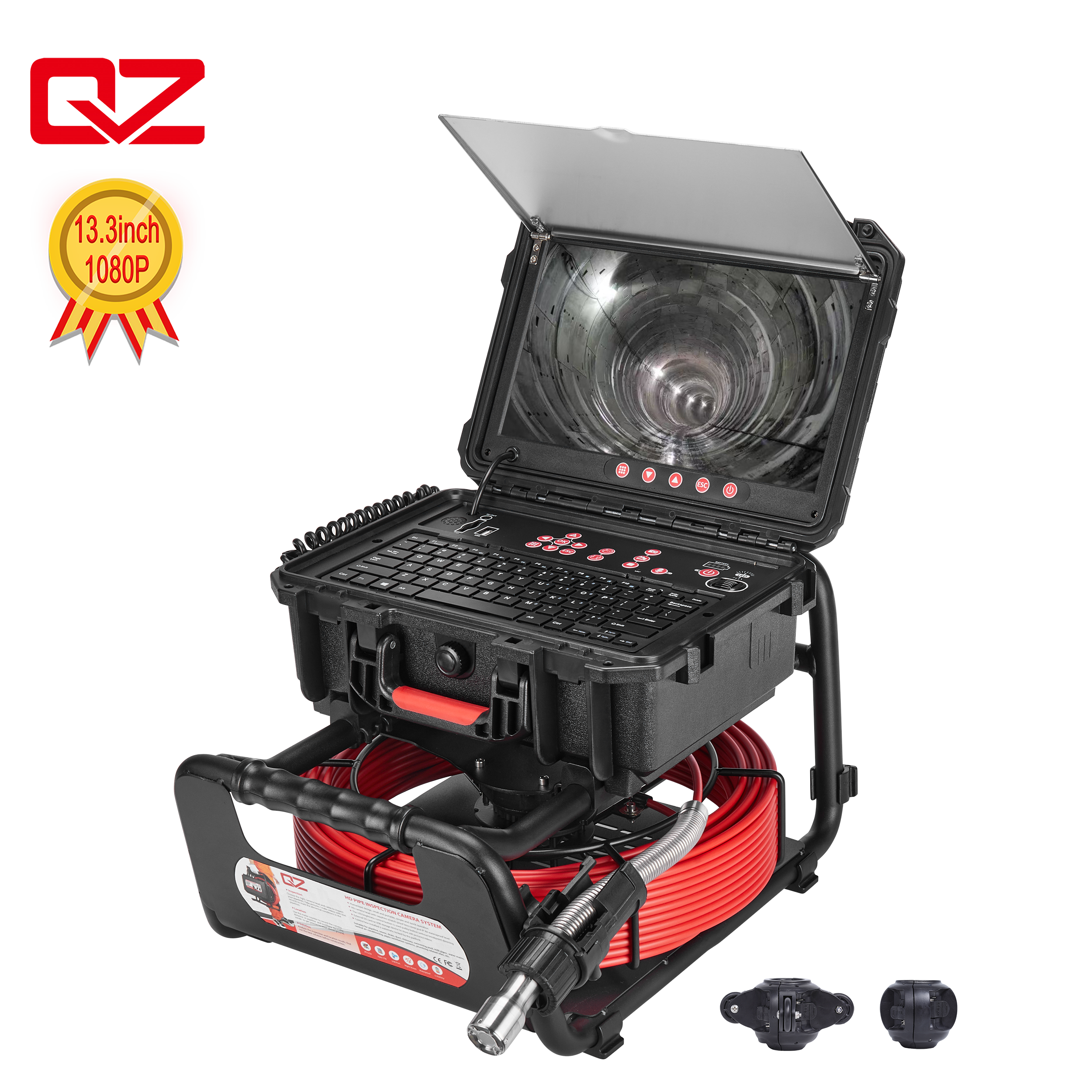
Roots may appear as fine strands, branching growth, or a dense mass within the opening. Recording where visible growth enters the pipe can help direct further assessment of a joint or damaged area.
The internal view does not show how far roots extend outside the pipe or establish every opening through which they entered. Removing visible roots also does not by itself prove that the underlying entry condition has been corrected.
Deposits can cover the wall, accumulate on the bottom, or restrict the opening. Their distribution and apparent effect on the bore can be useful observations even when their composition is uncertain.
Describe the visible appearance and location rather than assigning a precise chemical identity from color alone. Lighting, water, and camera settings can alter how a surface looks.
When deposits obscure the wall, the initial inspection cannot establish the condition beneath them. Cleaning followed by another camera pass may be needed before drawing conclusions about the covered surface.
A camera may reveal an object lodged at a fitting or material left within the pipe. The image can help a qualified service provider plan further investigation or removal.
Do not push the camera against an object to test whether it moves. That can wedge the head, alter the obstruction, or damage equipment. Record the position and inspect only within the normal operating limits of the system.
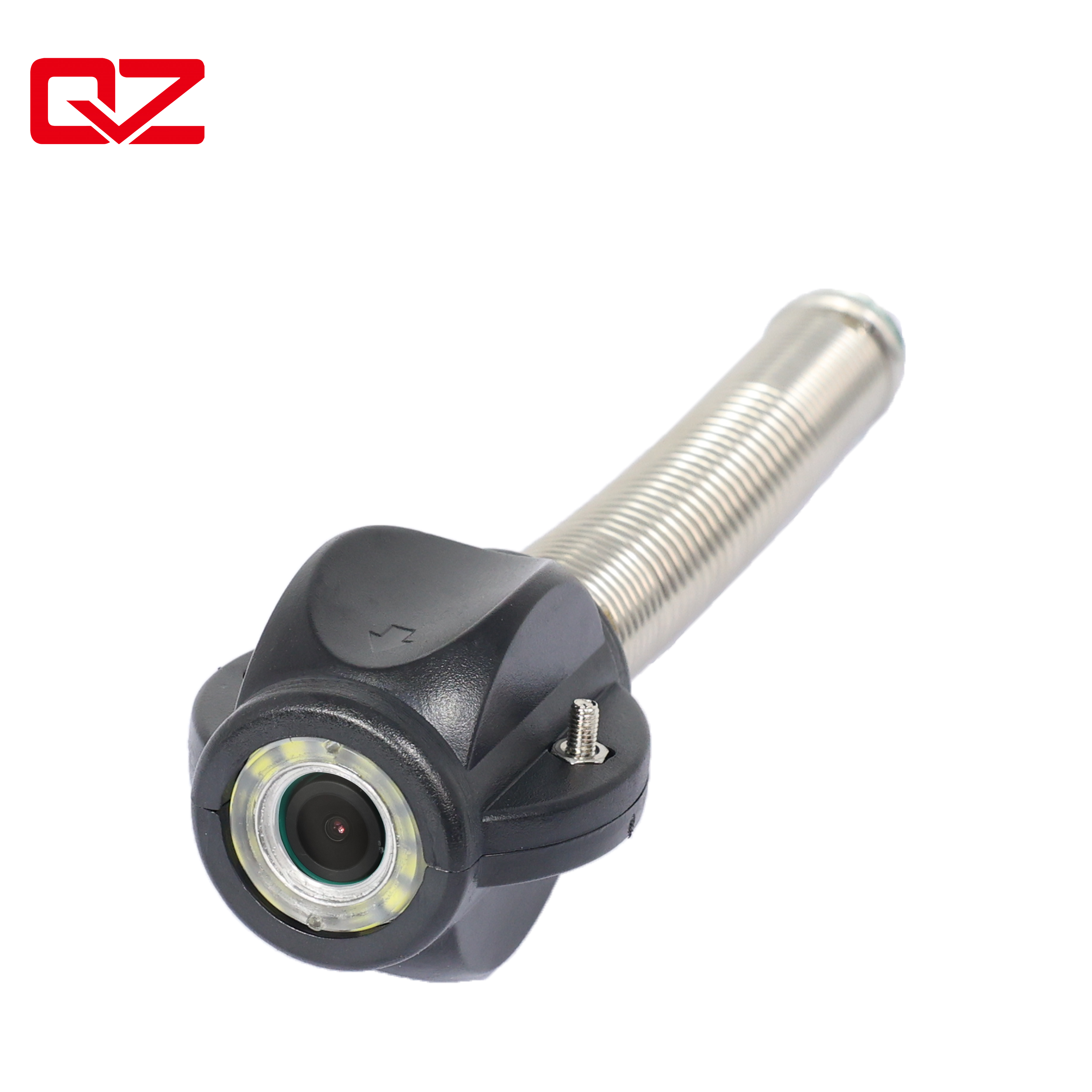
Visible lines, breaks, fragments, or missing areas may indicate damage that requires closer assessment. Capture more than one view where access permits, and distinguish a suspected crack from a stain, seam, or scratch that looks similar.
A complete collapse can prevent access to the pipe beyond it. In that situation, the inspection result is a visible stopping condition, not an assessment of the unviewed downstream section.
Joint defects can appear as an offset, step, open gap, or misaligned connection. The operator should record the approach and surrounding context rather than saving only a close image that loses the location and scale.
Images can support a qualitative finding, but precise dimensions require an appropriate measurement method. Perspective and camera position can make a gap or offset appear different from its actual size.
An altered cross-section or irregular surface may warrant further investigation. Compare the observation across several frames and consider camera tilt or an off-center position before concluding that the pipe is deformed.
Video does not directly measure remaining wall thickness or material strength. A visibly rough surface is useful evidence, but it does not justify a numerical remaining-life prediction without additional assessment.
A connection extending into the pipe can affect the open path or catch debris. Record the visible projection and its location, while avoiding unsupported claims about the full construction of the connection outside the inspected bore.
Where the view is important but incomplete, a different camera position, suitable centering, or controlled viewing direction may help. Any change must remain compatible with the pipe access and retrieval requirements.
Water entering through a visible opening can be evidence of infiltration during the inspection. An absence of visible ingress does not prove the pipe is watertight under all operating or groundwater conditions.
Standing water may suggest a low section, but it can also be influenced by restrictions and operating conditions. Observe where the camera enters and leaves the water, document the context, and avoid assigning an exact slope from that image sequence alone.
Flow observations are similarly conditional. A camera may show where water travels during a controlled test, but one observation cannot characterize every loading condition or establish hydraulic capacity.
When the camera enters standing water and later returns to an air-filled section, record where that transition occurs and what remained visible. If a repair decision depends on grade, request an appropriate measurement. The length of submerged footage is not a direct measurement of the pipe’s slope or the water depth.
A conventional internal camera cannot see external soil, hidden voids, buried supports, or the outside of an intact pipe wall. It also cannot inspect a branch it did not enter merely because the junction was visible from the main run.
Opaque water and deposits can hide otherwise important defects. A clear view of the upper wall does not establish the condition of the submerged bottom. Record which portions of the circumference were not visible.
Visual inspection alone is not a complete pressure test, leak test, structural calculation, or elevation survey. It may reveal reasons to request those methods, but it does not automatically replace them.
Nor does a clear recording guarantee future performance. Conditions can change, and a visual survey is limited to the time and scope of the inspection. State findings in terms of the reached and visible areas rather than issuing an unsupported guarantee about the whole system.
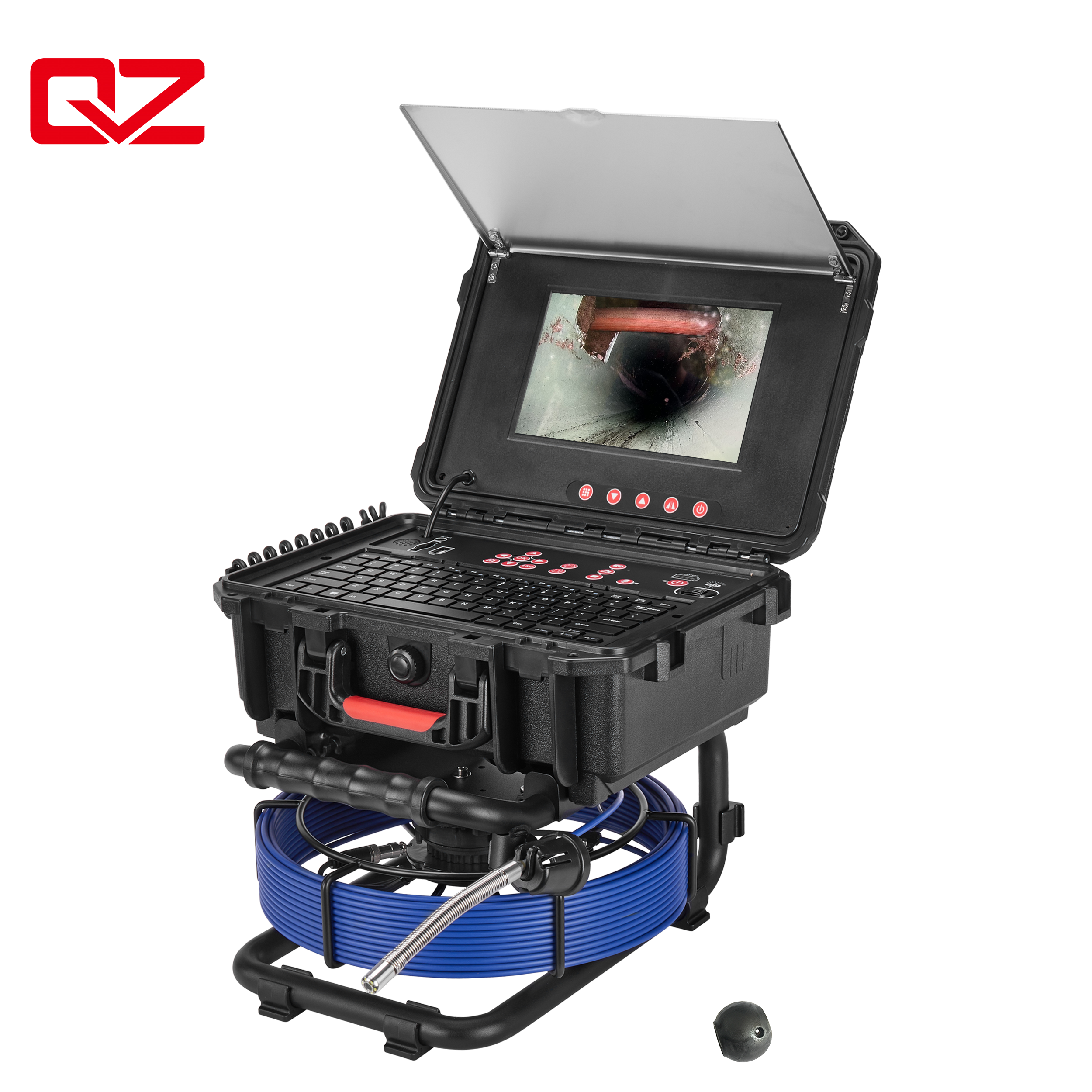
Begin with a clear question: locate a recurring obstruction, document a condition, review cleaning, or inspect a specific connection. The question determines which evidence is needed and whether the selected camera can obtain it.
Choose a suitable head, lighting arrangement, and deployment system. QYTeco's pipe inspection camera configuration is one example to evaluate against the pipe access and recording requirements. Its available functions should be matched to the task rather than used as proof of universal detectability.
During inspection, keep the lens clean, adjust illumination, and pause where a feature needs review. Preserve the link between close images and the wider sequence so another reviewer can understand where the observation occurred.
Finding | Record | Possible next step |
|---|---|---|
Wall obscured by deposits | Location and limits of visibility | Assess cleaning and reinspection needs |
Suspected structural defect | Clear sequence, position reference, accessible surrounding area | Qualified condition assessment and measurement where needed |
Persistent standing water | Entry and exit positions and flow conditions | Investigate restriction or verify grade as appropriate |
Complete obstruction | Last clear view and reason for stopping | Plan safe access, removal, or alternative investigation |
The sewer camera operating guide provides additional context for preparation and evidence capture. Whatever method is used, include the uninspected sections and unresolved questions in the final record.
A sewer camera can detect many visible internal problems, but its strongest contribution is a clearly documented observation with an appropriate interpretation. Access, water, deposits, perspective, and equipment selection set the limits. QYTeco, a supplier of inspection camera systems, provides configurations that support this work when matched to the pipeline and task. Use footage to identify what needs attention, preserve the evidence, and select further testing whenever the decision requires information beyond a visual inspection.
No. It may show visible ingress or an opening, but leaks can be intermittent, hidden, or directed outward without visible evidence. Appropriate testing may be needed.
Visible features may suggest a material, but lining, deposits, deterioration, and image quality can make identification uncertain. Confirm material through records or other suitable evidence when it affects the decision.
Not through an impassable obstruction from that entry. Another access point or prior work may be needed. The unviewed section must remain outside the completed inspection scope.
It can document visible condition within its coverage. A full structural conclusion may require measurements, material information, and engineering assessment beyond video.


