

Views: 0 Author: Site Editor Publish Time: 2026-09-22 Origin: Site


Operating "blind" in plumbing diagnostics carries heavy financial and operational risks for any service business. Historically, plumbers relied heavily on guesswork and intuition to find underground clogs. This outdated approach leads directly to unnecessary excavation. It also causes severely misdiagnosed blockages and prolonged, expensive labor hours. Guesswork simply wastes valuable time, frustrating both technicians and property owners alike.
Today, the sewer drain camera serves as the definitive tool for modern plumbing and municipal maintenance. It shifts your daily workflow from assumption to concrete, evidence-based diagnosis. You can actually see the hidden problem before you ever pick up a shovel.
Our article evaluates how visual inspection technology dramatically impacts diagnostic accuracy. We will outline the essential criteria you need for evaluating modern inspection equipment. Finally, we assess the practical return on investment when integrating these powerful tools into your daily operational workflows. You will learn exactly how to leverage this technology for maximum efficiency.
Sewer drain cameras eliminate diagnostic guesswork by providing real-time visual evidence of root intrusions, bellied pipes, and structural failures.
Evaluating a pipe inspection camera requires balancing cable rigidity, camera head maneuverability, and integration with locating sondes.
While highly effective, visual inspection has limitations—cameras cannot see through standing sludge and require proper pipe preparation.
Investing in a professional plumbing camera directly correlates with higher quote conversion rates through transparent customer evidence.
Traditional trial-and-error plumbing approaches kill operational efficiency. Plumbers often snake lines blindly, hoping to catch the blockage. Sometimes, crews dig exploratory trenches across beautifully landscaped yards just to find a simple leak. This guesswork frustrates technicians and severely damages client relationships. You cannot solve an underground problem effectively without clearly seeing it first.
Treating only the symptom creates hidden, compounding costs for your business. Clearing a clog might seem successful at first glance. However, if offset joints or severe root masses caused the blockage, the issue will inevitably return. Repeated service visits waste precious labor hours. They also cause unnecessary, expensive wear on your mechanical cabling equipment. You spend money fixing symptoms instead of addressing the actual root cause.
Furthermore, clients demand verifiable proof today. A distinct lack of visual evidence creates a massive trust deficit. You might recommend a high-ticket repair to solve the issue permanently. Trenchless pipelining or total pipe replacements cost thousands of dollars. Skeptical homeowners and commercial property managers will naturally resist these expensive quotes. They need to see the broken pipe themselves. Visual proof removes their hesitation instantly, making the sales process smoother.
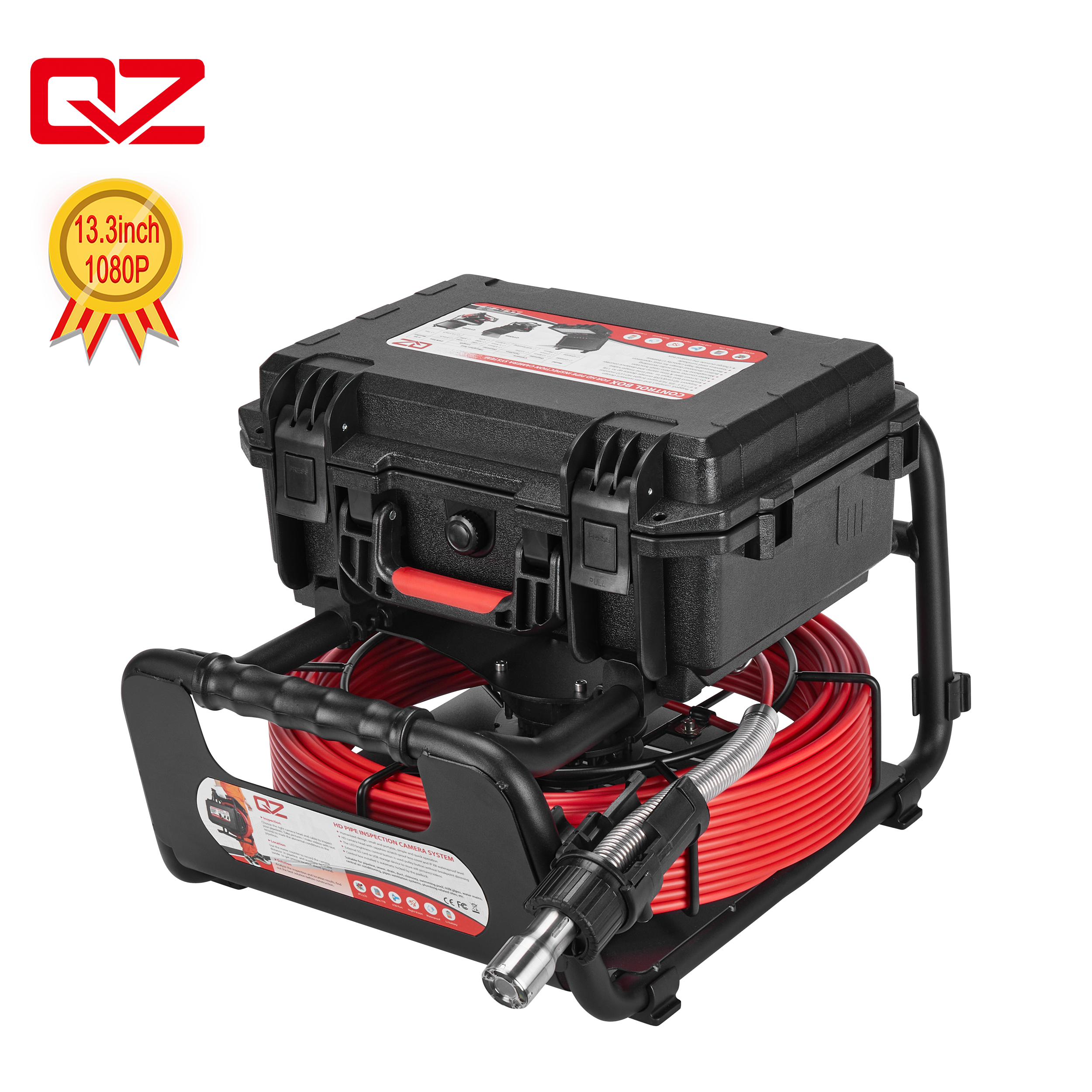
Using a sewer inspection camera removes all mystery from pipeline maintenance. You can identify the exact issue immediately on a high-definition monitor. The screen reveals whether grease buildup, flushed paper, or invasive tree roots caused the backup. It also highlights severe structural defects hidden underground. You can easily spot hairline cracks, severe channeling, and bellied lines where water pools improperly.
Modern camera systems feature built-in transmitters called sondes. This precision locating technology completely changes how you dig. Typically broadcasting at an industry-standard 512Hz frequency, the camera head sends a strong signal above ground. Operators use a handheld receiver wand to pinpoint the exact location of the defect. You can determine the precise depth of the broken pipe. This capability prevents destructive, unnecessary digging across a client's property, saving thousands in landscape restoration.
Condition baselining offers another massive advantage for plumbing professionals. Plumbers record the pipe's internal condition before starting any clearing service. You might perform hydro-jetting or mechanical descaling next. Afterward, you record a detailed post-service video. This confirms the true efficacy of your pipe patching or cleaning efforts. Clients love seeing this clear before-and-after contrast. It proves the value of your hard work.
Selecting the best equipment requires careful consideration of your daily needs. You must balance several technical specifications to find the perfect fit. Camera head features directly impact your diagnostic clarity in the field. Self-leveling heads keep the image upright automatically, regardless of how the camera twists. This orientation matters greatly for accurate structural diagnosis. You always know which side of the pipe is the bottom. Lighting intensity also plays a crucial role in dark environments. You need adjustable LED arrays covering the lens perimeter. Different pipe diameters require varying light levels for crisp, clear visibility without glare.
Push rod dynamics determine how far and how easily you can reach a defect. You must evaluate the cable's rigidity versus its flexibility. High flexibility helps you navigate tight P-traps easily. It also pushes smoothly through sharp 90-degree bends. However, stiffer, fiberglass-reinforced cables allow you to push over 100 feet in long, straight laterals. You need the right balance for your specific residential or commercial job types.
Next, consider the recording and reporting modules included with the control box. On-demand video recording is absolutely essential for modern workflows. Voiceover microphone capabilities let you narrate the inspection live for the client. Easy digital file-sharing makes client presentations seamless. You can instantly email video links for fast insurance claim approvals.
Finally, assess the durability and ingress protection of the entire unit. A true pipe inspection camera must withstand harsh, highly corrosive environments daily. Ensure the equipment carries a minimum IP68 waterproof rating. Lenses should ideally feature scratch-resistant sapphire glass. This guarantees the unit can survive total submersion and rough handling during daily use.
Visual inspection tools provide incredible insights for service teams. However, they do have distinct technical limits. Plumbers must manage their expectations and client expectations accordingly. First, you must understand the "clear water" requirement. Cameras act as visual diagnostic tools, not magical X-ray machines. They absolutely cannot see through thick mud or solid waste. Grease sludge and heavy murky water instantly blind the camera lens. You often must perform pre-cleaning via high-pressure hydro-jetting first. Clear water allows for an accurate, unhindered visual assessment of the pipe walls.
Equipment maintenance requires regular, proactive attention. You should expect standard wear-and-tear over months of heavy use. Pushing cables through rough cast iron eventually causes minor scratching on camera lenses. Aggressive maneuvering by untrained staff might lead to severe push-rod kinking. Lithium-ion battery degradation happens naturally after years of daily charging cycles. Always budget for the operational cost of replacement parts.
Finally, prepare your team for a moderate learning curve. Operating a modern system is quite straightforward physically. You just push the cable and watch the digital screen. However, interpreting the visual data accurately takes dedicated practice. Distinguishing between minor scale buildup and a critical, leak-causing structural failure requires genuine field experience. Training your technicians properly ensures accurate, reliable diagnostics every single time.
Purchasing advanced inspection equipment represents a significant business decision. You must weigh the initial capital cost against the long-term operational capabilities. Entry-level models generally range from $500 to $1,500. These systems suit light residential use perfectly. They handle simple household clogs and short lateral runs. Conversely, commercial-grade systems cost between $4,000 and $10,000 or more. You desperately need these robust units for continuous, daily municipal work. Heavy commercial diagnostics also demand this higher tier of rugged durability.
Visual evidence drives direct, measurable revenue impact. It dramatically increases close rates on high-margin repair jobs. Customers naturally doubt expensive repair quotes when they cannot see the problem. Showing them a crisp video of their collapsed pipe removes this doubt entirely. Transparent evidence builds immediate, undeniable trust. Trust quickly converts into approved estimates and highly profitable booked jobs.
Camera System Comparison Chart
System Tier | Price Range | Ideal Application | Durability & Reach |
|---|---|---|---|
Entry-Level | $500 - $1,500 | Light residential, short drains | Basic flexibility, up to 100 feet |
Commercial-Grade | $4,000 - $10,000+ | Heavy commercial, municipal mains | IP68 rating, rigid push rod, up to 300+ feet |
Follow these practical next-step actions when shortlisting a drain inspection camera:
Request field demos: Test the equipment in real-world scenarios to gauge actual performance.
Verify warranty terms: Understand exactly what components fall under manufacturer coverage.
Check repair availability: Ensure local service centers can fix damaged push rods quickly to minimize downtime.
Upgrading to a professional plumbing camera is no longer an optional luxury. It serves as a mandatory diagnostic baseline for any modern plumbing business. Property maintenance teams also rely heavily on this rugged gear. You eliminate expensive guesswork, reduce wasted field labor, and build immense client trust.
We strongly advise buyers to prioritize overall durability over flashy extras. Focus on integrated locating technology and rigid, fiberglass push rods. Do not overspend on superficial features like massive, fragile screen sizes. A rugged, reliable system will serve your business much better over the long term.
Are you ready to upgrade your diagnostic capabilities? Browse our extensive product catalog today to find the perfect fit. Request a detailed technical spec sheet for deeper engineering insights. Contact a dedicated sales engineer for a tailored equipment recommendation. Start diagnosing underground pipes with absolute precision and unmatched confidence.
A: Standard push-rod cameras typically inspect lines ranging from 2 inches to 6 inches in diameter. They handle residential laterals and branch lines easily. For larger municipal mains exceeding 8 inches, professionals use motorized crawler cameras. These crawlers navigate massive pipes and provide stable, illuminated video footage.
A: Cameras do not detect microscopic water escape directly. Instead, they spot the structural damage causing the leak. You will see cracked walls, broken joints, or severe root intrusions. Without visible pipe failure, a camera cannot pinpoint tiny leaks. You might need acoustic leak detectors for microscopic issues.
A: Standard push rods reach lengths of 100 to 300 feet. The actual reach depends on cable rigidity and pipe geometry. Pushing a cable manually becomes physically difficult after 200 feet, especially if the pipe has multiple sharp bends. Straight municipal laterals allow for maximum push distance.
A: Yes, professional systems feature IP68 waterproof ratings. They survive total submersion easily. However, working in flooded pipes presents visibility issues. The lens cannot see through cloudy, dirty, or sludge-filled water. You often need to hydro-jet the line first to clear the murky water for proper inspection.


