

Views: 0 Author: Site Editor Publish Time: 2026-10-13 Origin: Site


Buying a professional plumbing camera represents more than just a simple tool purchase. It is a critical capital investment. This gear directly impacts your diagnostic accuracy, service revenue, and business liability. Many contractors mistakenly try to use cheap consumer-grade endoscopes for commercial jobs. They quickly learn a painful lesson. Downtime from broken, inferior equipment often costs far more in lost jobs than buying commercial-grade systems upfront. You need reliable tools built for brutal field environments.
Our goal is to provide an objective, field-tested framework. We want to help you evaluate and shortlist your next equipment upgrade. You will learn how to choose a reliable sewer inspection camera based on durability, essential features, and vendor reliability. We highlight practical scenarios to ensure your investment drives immediate returns and elevates your everyday service calls.
Push Rod Quality is Paramount: The balance between flexibility (navigating bends) and stiffness (pushing distance) dictates field usability.
Locating Capabilities are Non-Negotiable: A built-in sonde (typically 512Hz) is essential for pinpointing issues above ground.
Understand Visual Limitations: Cameras identify structural defects (roots, cracks) but cannot see through opaque, standing water.
Prioritize After-Sales Support: Repair turnaround times and modular part availability define the true lifecycle value of the equipment.
Guesswork in the plumbing industry destroys profit margins. Relying on assumptions leads to unnecessary excavations and frustrated property owners. Implementing commercial-grade imaging shifts your business model. You move from speculative repairs to evidence-based diagnostics. You can show clients undeniable video proof of collapsed lines or root intrusions. This transparency naturally increases ticket sizes. It also drastically reduces callback rates because you fix the actual root cause.
Before purchasing, you must define your primary application scenarios. Residential plumbers face vastly different challenges than municipal contractors. A standard home requires navigating tight P-traps and residential laterals. Municipal work involves pushing long cables down straight, wide-diameter mains. You cannot buy a single unit and expect it to handle everything perfectly.
Pipe diameter matching dictates your success. You must pair the camera skid and push rod length to the specific pipe sizes your team services most often. Trying to push a massive municipal skid through a 2-inch residential line guarantees equipment damage. Conversely, a tiny residential camera will get lost or flip over inside a 6-inch main line.
Table: Pipe Diameter and Equipment Matching Guide
Application Scenario | Typical Pipe Diameter | Recommended Equipment Focus |
|---|---|---|
Indoor Residential | 1.5 to 3 inches | Highly flexible push rod, smaller micro-camera head. |
Residential Laterals | 3 to 4 inches | Medium stiffness push rod, standard skid, 100-foot cable. |
Commercial/Municipal | 6+ inches | Rigid push rod, large wheeled skids, 200+ foot cable. |
You need to assess your daily service tickets. If you mostly handle residential clogs, prioritize a flexible drain inspection camera. We recommend keeping different units on the truck. Using modular systems with interchangeable heads also solves the varying diameter problem.
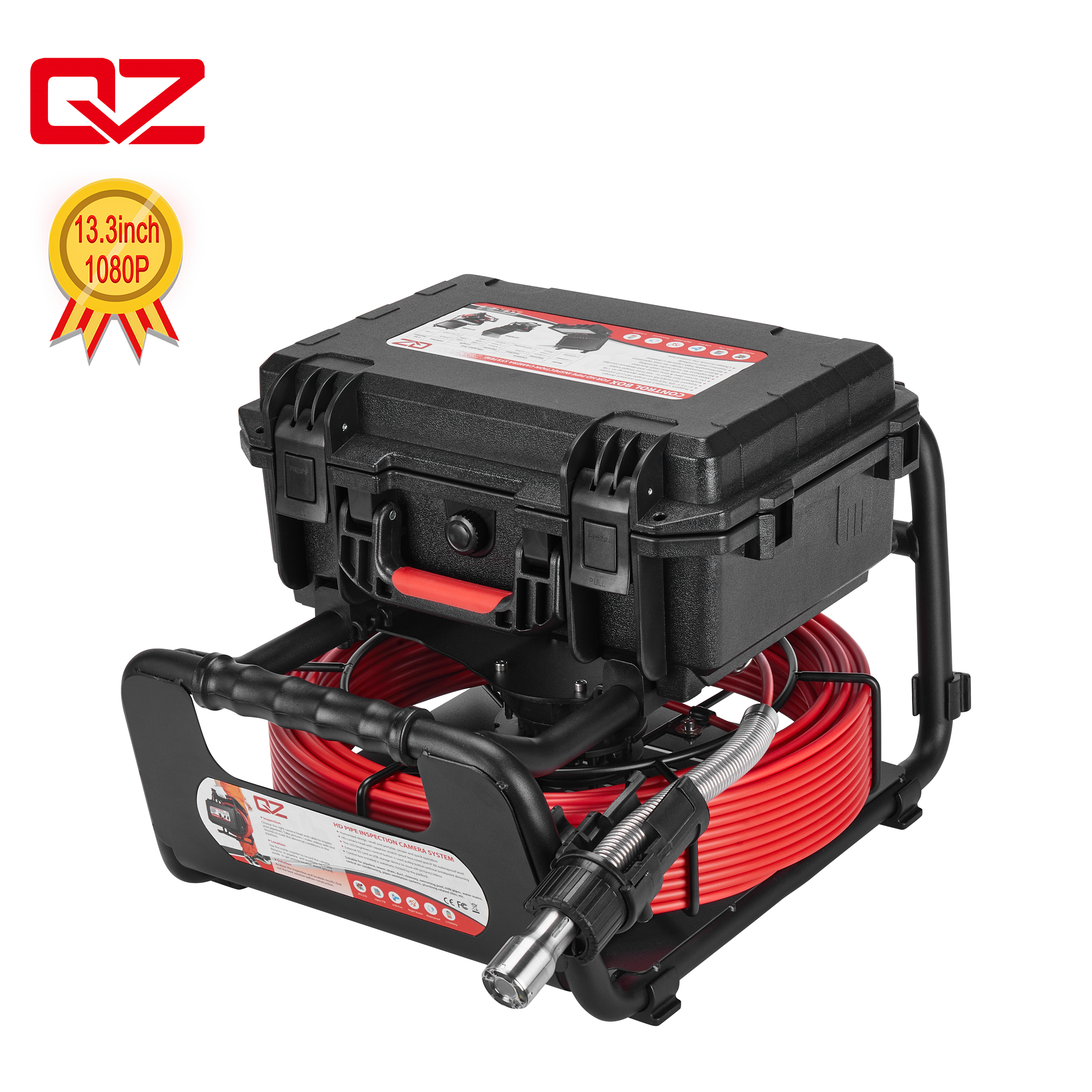
The push rod serves as the backbone of your entire inspection system. You face a constant engineering trade-off out in the field. The cable must remain rigid enough to push 100 feet down a straight pipe without buckling. Yet, it must stay flexible enough to navigate 90-degree sweeps. If a rod is too stiff, it snaps inside tight bends. If it is too flexible, it coils up on itself after 30 feet.
Premium push rods usually feature an inner fiberglass core coated in high-density protective polymers. This construction resists abrasion from jagged pipe edges. You must physically test this stiffness during a demo. Push the cable against a wall. Notice how much force it takes before it bends.
Camera head construction matters just as much. Subterranean environments destroy weak electronics quickly. You should look for camera housings milled from solid stainless steel. Plastic housings will crack against rough cast iron. The lens itself must use scratch-resistant sapphire crystal. Standard glass lenses turn cloudy and useless after a few months of scraping against sand and gravel.
Waterproofing standards are critical. Do not accept anything less than an IP68 rating. This rating guarantees the head can survive continuous submersion under pressure. Sewers are inherently wet. Your equipment must handle deep water without failing.
Finally, we must acknowledge the ultimate field risk. The exact point where the rigid camera head meets the flexible push rod is the most common failure zone. Plumbers yank the cable to free a stuck head, and the internal wiring snaps. You must carefully evaluate the strain relief spring. A heavy-duty, tightly coiled stainless steel spring at this junction absorbs pulling shock. It saves your internal wires from snapping under tension.
Crystal-clear optics mean nothing if you cannot interpret the footage properly. You need specific technological features to deliver professional results.
Self-Leveling Camera Heads: As you push a cable through a pipe, the camera naturally twists and rotates. Without self-leveling technology, the video feeds upside down. This confuses both technicians and clients. A self-leveling mechanism uses internal bearings and gravity to keep the image perfectly upright. This orientation helps you accurately determine where water is pooling.
Advanced Illumination: Pipes contain zero natural light. Aged cast iron and clay materials absorb light rapidly. You need high-intensity, adjustable LED lighting surrounding the lens. Adjustable brightness prevents glare. If you push into a white PVC pipe, harsh LEDs will wash out the entire image. You must be able to dim the lights on demand.
Built-in Sondes and Transmitters: Finding a collapsed pipe underground is useless if you cannot tell your excavation crew exactly where to dig. You must use a professional plumbing camera featuring an integrated 512Hz sonde. This transmitter sends a signal through soil and concrete. You use an above-ground locator wand to trace the exact path and depth of the camera head.
On-Demand Recording and Text Overlay: Modern clients expect digital reporting. Your system must record video directly to a USB drive or local storage. Look for systems offering built-in microphones for voiceovers. You can narrate the inspection as it happens. On-screen text overlays show date, time, and exact distance counters. These features transform a simple video into a legally binding inspection report.
To build trust with property owners, you must manage their expectations. Many clients believe a pipe inspection camera possesses magical X-ray vision. You must educate them on actual capabilities. Being transparent prevents disputes and establishes your authority as an honest expert.
Optical cameras excel at identifying physical blockages and structural defects. You can easily spot thick tree root intrusions breaking through clay joints. The camera quickly reveals offset pipe joints causing soil erosion. You will easily document pipe bellies where lines have sagged and hold stagnant water. Heavy scale buildup in cast iron lines shows up perfectly. Structural cracks and fractures are highly visible on a high-definition monitor.
However, you must explicitly communicate the limitations. An optical lens functions exactly like a human eye. It cannot see through solid matter. The camera cannot see through thick mud, heavy grease sludge, or opaque standing water. If a sewer line is completely backed up, pushing a camera into the black water yields zero diagnostic value. The screen will just go dark.
This reality leads to an essential implementation lesson. You almost always need to jet or cable a line before performing a high-quality inspection. Clearing out the opaque water and heavy grease allows the lens to actually see the pipe walls. Always inform clients that a pre-cleaning step might be necessary to achieve an accurate visual diagnosis.
Your evaluation process must extend far beyond the hardware specifications. Even the most rugged equipment eventually breaks. The true value of your investment depends heavily on vendor support and service infrastructure.
Consider the hidden cost of downtime. Frame your purchasing decision around what happens when a technician accidentally snaps a push rod. A cheaper, unbranded unit quickly becomes an expensive liability if it takes six weeks to ship overseas for repairs. During those six weeks, you lose thousands of dollars in potential revenue. You also damage your reputation when you have to decline inspection jobs.
We strongly recommend prioritizing modular systems over fully integrated units. In a modular setup, components operate independently. If a camera head floods or a monitor shatters, you can quickly swap that specific part in the field. You simply order a replacement part and keep working. Fully integrated systems often force you to ship the entire heavy spool back to the manufacturer just to fix a broken LED light.
Investigate the warranties and servicing networks before you buy. Ask the manufacturer direct questions. Do they operate local service centers in your region? Do they offer loaner equipment programs while your primary unit undergoes maintenance? Are replacement parts readily available for overnight shipping? Choosing a vendor with robust, accessible support guarantees your business stays operational.
Choosing the best professional equipment requires balancing optical clarity with rugged durability. You need high-quality push rods, self-leveling heads, and integrated 512Hz sondes to perform efficient diagnostics. Navigating tight bends safely relies entirely on superior cable engineering and stainless steel construction.
Equally important is acknowledging system limitations and planning for maintenance. A transparent approach to diagnostics builds instant client trust. Securing reliable vendor support ensures you avoid catastrophic downtime.
Before finalizing your purchase, take action. Request field demos to personally test push rod stiffness. Verify that the camera skid matches your most frequent pipe diameters. Finally, confirm repair turnaround times with the manufacturer to protect your operational efficiency.
A: A high-quality system typically lasts between three to five years under heavy commercial use. However, lifespan depends entirely on maintenance habits and field conditions. Technicians who forcefully yank cables or neglect to clean corrosive sludge off the push rod will destroy equipment much faster.
A: Yes. Self-leveling technology keeps the video feed upright on the monitor, regardless of how the camera head twists inside the pipe. This prevents disorientation, makes identifying the exact location of pooling water easier, and provides a much more professional presentation for your clients.
A: No. Cameras identify the visual structural defects—like cracks, offset joints, or root intrusions—that ultimately cause leaks. They are optical tools, not acoustic leak detectors. They cannot determine if water is actively escaping into the surrounding soil unless the damage is severe and highly visible.
A: A 512Hz sonde is a tiny radio transmitter built into the camera head. The 512Hz frequency is the plumbing industry standard because it reliably penetrates cast iron, concrete, and deep soil. It allows you to pinpoint the exact location and depth of a pipe defect from above ground.


