

Views: 0 Author: Site Editor Publish Time: 2026-10-27 Origin: Site


Transitioning from reactive digging to precise diagnostics is the defining shift for modern plumbing and facility maintenance operations. Blind diagnostics consistently lead to misquoted jobs, unnecessary excavation, and compromised client trust. Homeowners and property managers demand transparency before authorizing expensive repairs. Digging up a concrete slab without pinpointing the exact failure point invites chaos into any project.
Deploying the right plumbing camera transforms unknown blockages into verifiable, visually documented data. This visual proof accelerates both project approval and resolution. You will learn how to evaluate critical hardware dimensions, match equipment strictly to your target pipe types, and navigate the practical limitations of field diagnostics. Upgrading your inspection methods removes guesswork. It empowers your technicians to diagnose structural integrity accurately and propose targeted, effective solutions every single time.
Application Scope: Residential jobs require maneuverability in tight lines (1.5"–4"), while commercial applications demand rigid pushrods and extended lengths (up to 400ft) for main municipal tie-ins.
Core Evaluation Criteria: Resolution, pushrod stiffness, integrated sondes (locators), and DVR reporting capabilities dictate the ROI of a professional plumbing camera.
Implementation Reality: Cameras diagnose structural integrity but cannot bypass heavy sludge without prior hydro-jetting; environmental clarity is a prerequisite for accurate inspection.
Decision Matrix: Selection should strictly align with the user's primary service environment—over-investing in commercial-grade length for residential drain cleaning reduces field efficiency.
Guesswork slows down field operations. Plumbers historically relied on drain snakes and acoustic cues to identify pipe blockages. These outdated methods leave structural issues entirely hidden. A high-quality professional plumbing camera eliminates this uncertainty. It illuminates the interior pipe walls, revealing exactly what obstructs the flow. Technicians identify problems rapidly. Precise visual data reduces diagnostic time by up to 70 percent. You stop wasting hours clearing a line only to realize it requires a full replacement.
Visual evidence fundamentally changes the sales dynamic. Explaining a root intrusion or a pipe belly to a client rarely conveys the urgency of the problem. Clients often suspect upselling when they cannot see the damage themselves. High-definition video evidence destroys these objections instantly. You simply show them the screen. Watching aggressive tree roots tear through a PVC joint triggers an immediate psychological response. The client understands the severity. Quote conversion rates skyrocket when you replace verbal descriptions with undeniable video proof.
Liability remains a major concern for contractors. Snaking an old, deteriorated cast-iron pipe carries inherent risks. The friction can sometimes collapse an already failing line. If you do not document the preexisting condition, the property owner may blame you for the damage. Video inspections mitigate this risk entirely. You record the pipe interior before beginning any clearance work. You document heavy corrosion or existing fractures. After completing the repair, a post-work inspection verifies the line flows freely. This recorded data protects your business from unwarranted claims and builds immense trust with property managers.
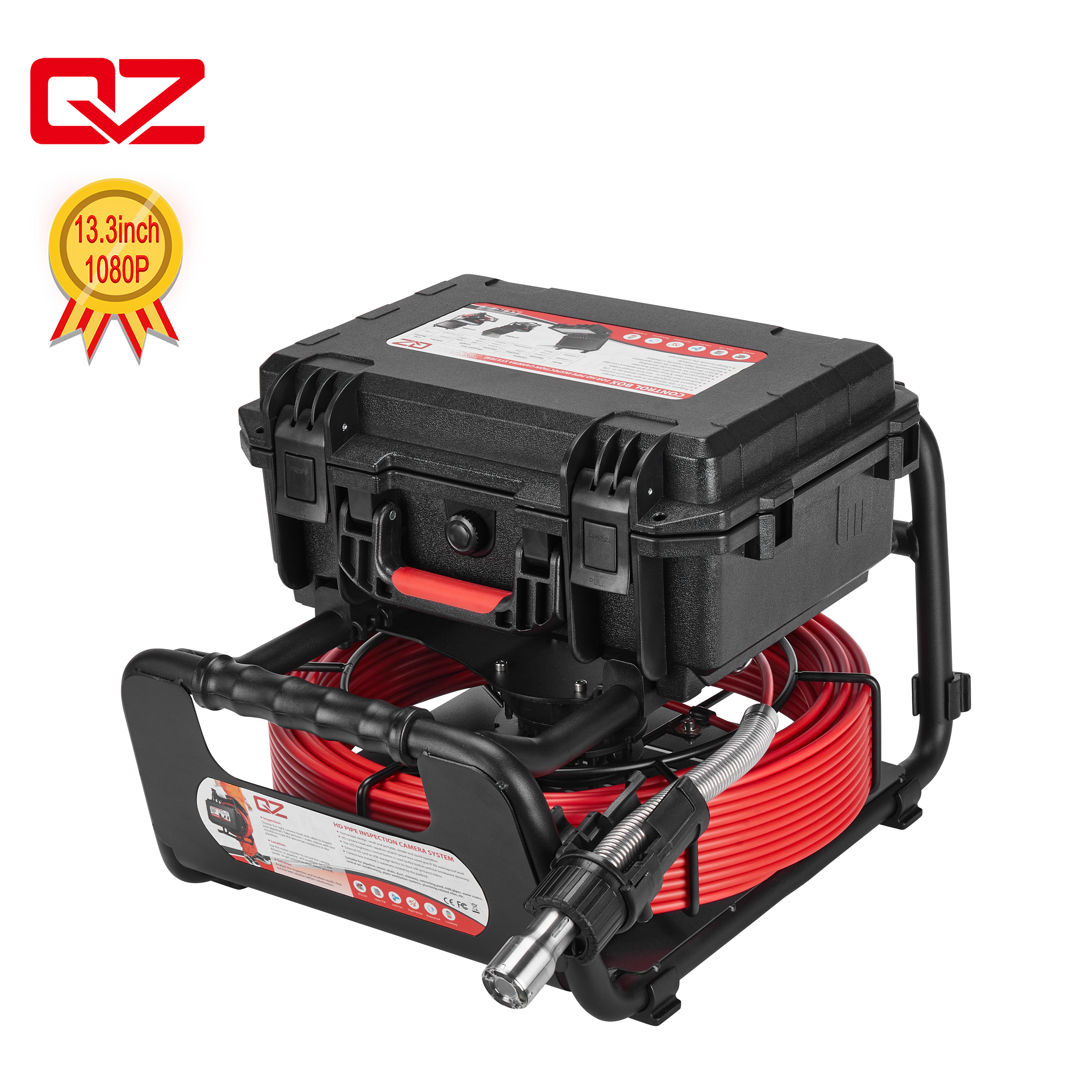
Selecting inspection hardware requires understanding your operational environment. Residential lines behave very differently from municipal sewer mains. A single device rarely excels in both arenas.
Residential plumbing heavily features tight turns and narrow diameters. Target pipes typically include branch lines, lateral lines running to the street, HVAC condensation drains, and under-slab plumbing. These pipes range from 1.5 to 4 inches in diameter.
Navigating residential architecture demands specific hardware capabilities. Technicians must push the camera head through multiple P-traps and sharp 90-degree bends. Rigid commercial rods simply fail here. They snap or get permanently lodged inside tight elbows. A residential drain inspection camera requires high cable flexibility. Furthermore, independent plumbers move equipment through furnished homes. They need compact, lightweight reels. Carrying a 150-pound commercial reel up a flight of carpeted stairs damages property and fatigues technicians.
Commercial environments present a completely different set of physical challenges. Technicians inspect main sewer lines, massive grease trap lines, storm drains, and municipal connections. These pipes typically span 4 to 12 inches or more in diameter. Distances stretch significantly farther than residential laterals.
Commercial hardware must overcome tremendous friction. When pushing a camera 200 feet down a dry 8-inch pipe, a flexible residential rod simply buckles. It coils upon itself instead of driving the camera head forward. You need an incredibly stiff, Kevlar-reinforced pushrod. Additionally, orientation becomes confusing inside wide pipes. Self-leveling camera heads keep the image upright, ensuring you can differentiate the pipe floor from the ceiling. Operators also utilize skid attachments. These plastic or metal guides keep the camera centered in large-diameter pipes. Centering prevents the lens from scraping through bottom sludge and maintains an optimal focal length for clear imagery.
Not all inspection systems deliver the same diagnostic value. You must evaluate core components to ensure they meet your daily field requirements. Understanding the technical nuances prevents costly purchasing mistakes.
Resolution directly impacts diagnostic accuracy. Standard definition cameras often blur critical details. You might mistake a severe structural hairline fracture for harmless calcium buildup. High-definition systems, offering 720p or 1080p resolution, clarify these anomalies. However, resolution means nothing without proper illumination. Deep pipes swallow light. Look for adjustable LED arrays surrounding the camera lens. You need the ability to dim the lights in highly reflective PVC pipes to prevent glare. Conversely, dark, light-absorbing cast iron requires maximum brightness to spot corrosion scaling.
Pushrod selection defines where your camera can go. You face an unavoidable physics trade-off. Flexible fiberglass rods easily navigate sharp bends but lack pushing power over long distances. They excel in 100-foot residential runs. Rigid, Kevlar-reinforced rods push effortlessly past 200 feet but will not clear a 2-inch P-trap. Some manufacturers offer progressive dual-core rods, but you generally must choose a rod stiffness optimized for your most common pipe diameter.
Finding a blockage visually solves only half the problem. You still must dig it up. Digging blindly destroys landscaping and ruins driveways. An integrated 512Hz sonde changes this. The sonde sits directly inside or behind the camera head. It emits a continuous low-frequency signal. Technicians use an above-ground locator wand to track this signal through concrete, dirt, and cast iron. They pinpoint the exact X and Y coordinates on the ground surface. More importantly, the wand determines the precise depth. This capability dictates whether you dig with a hand shovel or rent a backhoe.
Data delivery finalizes the service cycle. Property managers and insurance adjusters require formal documentation before approving payments. A built-in Digital Video Recorder (DVR) captures the entire inspection. Advanced systems feature keyboard text overlays. Technicians type out notes directly onto the video feed, labeling specific defects or distances. Wi-Fi streaming capabilities allow you to beam the video directly to a smartphone. You can then email the compliance-ready MP4 file to the client before leaving the driveway.
Table 1: Technical Feature Comparison by Application
Feature | Residential Focus | Commercial Focus |
|---|---|---|
Pushrod Length | 50 ft – 150 ft | 200 ft – 400 ft+ |
Pushrod Flexibility | High (Navigates tight P-Traps) | Low/Rigid (Prevents buckling over distance) |
Camera Head Size | Under 1 inch (Micro/Compact) | 1.5 inches to 2 inches+ (With centering skids) |
Image Orientation | Fixed axis | Self-leveling mandatory |
Power Source | Battery packs (Highly portable) | High-capacity batteries or generator compatible |
Even the most advanced technology faces harsh physical barriers underground. Managing client expectations and technician training ensures a smooth diagnostic process.
Camera lenses cannot defy physics. They do not possess X-ray vision. A sewer inspection camera cannot see through dense mud, thick grease walls, or opaque wastewater. When a pipe holds standing black water due to a severe belly, submerging the camera yields a completely blind, dark screen. Technicians must establish environmental clarity before expecting accurate visual data. Pre-jetting with a high-pressure hydro-jetter or clearing the main blockage with a mechanical snake is often required. You clear the sludge first, then use the camera to diagnose why the sludge accumulated.
Sewer environments rapidly degrade delicate electronics. Scratched lenses render expensive camera heads useless. Dragging an unshielded lens across jagged cast iron ruins the sapphire glass cover. You must utilize protective skids whenever possible. Additionally, O-ring degradation introduces moisture into the camera housing. A single drop of internal condensation fogs the lens permanently. Technicians must inspect and lubricate waterproof O-rings regularly. Post-job sanitation is equally vital. Failing to wipe down the pushrod leaves corrosive wastewater on the reel assembly, significantly reducing the equipment's lifespan.
Seeing the pipe interior does not automatically guarantee a correct diagnosis. Interpreting screen anomalies requires experience. To an untrained eye, a thick layer of dried soap scum closely resembles a collapsed pipe wall. Heavy cast iron calcification mimics structural cracking. Technicians must undergo rigorous training to interpret these visual cues accurately. Misdiagnosing scale as a fracture leads to false positives. Proposing a $10,000 excavation when a $500 descaling service would suffice ruins your company reputation. Training ensures your team proposes ethical, evidence-based solutions.
Selecting hardware demands a pragmatic look at your daily service tickets. Over-investing in features you never use drains capital. Under-investing limits your diagnostic reach.
Solo operators and small residential teams should prioritize agility. You need compact, all-in-one systems. Look for 100-foot flexible fiberglass cables. These lengths cover 95 percent of standard residential sewer laterals. Prioritize basic built-in DVRs that record straight to an SD card or USB drive. Mid-range durability keeps the initial purchase price accessible while ensuring a rapid return on investment. Avoid massive metal reels. They weigh too much for one person to maneuver through a finished basement safely.
Industrial outfits face punishing conditions daily. You require robust, modular systems. Modular designs allow you to swap out damaged camera heads in the field without sending the entire reel back to the manufacturer. Prioritize stiff pushrods exceeding 200 feet. Self-leveling technology is non-negotiable for large municipal pipes. Ensure the system includes heavy-duty centering skids. Look for comprehensive warranty support and readily available replacement parts to minimize field downtime.
Do not guess what equipment you need. Look at your own historical data. We recommend auditing your past six months of service calls. Determine the average pipe diameter your team encounters. Calculate the average distance from the cleanout to the municipal tie-in or septic tank. If 80 percent of your calls involve 2-inch kitchen lines under 50 feet, buying a 300-foot commercial reel wastes resources. Finalize your budget constraints only after you define your most frequent spatial requirements.
Upgrading to a pipe inspection camera shifts your entire operation from reactive guessing to proactive, evidence-based problem solving. It acts as a primary driver of operational efficiency and sales conversion. You diagnose structural failures accurately, you locate excavation points precisely, and you build unbreakable trust with visual proof.
The best inspection unit strictly balances the spatial constraints of your typical job site with reliable documentation features. A residential plumber demands flexibility, while a commercial contractor demands rigidity and reach.
Take action today by auditing your recent service history. Compare specific technical specifications like sonde frequencies, pushrod core materials, and DVR capabilities. Consult with an equipment specialist to match a camera system exactly to your fleet's daily demands.
A: Reach depends entirely on the hardware design. Small, hand-held borescopes generally reach between 3 to 10 feet. Residential push-rod cameras typically cover 100 to 150 feet. Heavy-duty commercial reels feature rigid pushrods that can easily navigate 300 to over 400 feet down main municipal lines.
A: No. Cameras inspect the interior hollow space of a pipe to locate structural defects like cracks, bellies, or root intrusions. They cannot see moisture passing through a wall. You should use thermal imaging cameras or acoustic leak detectors for precise external moisture mapping behind drywall.
A: A 512Hz sonde is a tiny transmitter located inside the camera head. It emits a low-frequency radio signal. This specific frequency penetrates dense materials like concrete, wet dirt, and cast iron effectively. Operators use a surface locator wand to track this signal, determining the exact depth and location for excavation.
A: Not always. Many manufacturers sell inspection reels and locator wands as separate standalone items. While some premium suppliers offer complete bundled kits, you must carefully read the product description. If you buy a standalone camera reel with a sonde, you still need to purchase a compatible 512Hz locator wand from a third-party vendor.


