

Views: 0 Author: Site Editor Publish Time: 2026-04-02 Origin: Site


A sewer line problem is rarely visible from the outside. A toilet may flush slowly, a floor drain may smell bad, or wastewater may back up at the lowest point in a building, but these symptoms only show that something is wrong. They do not show exactly where the problem is, how serious it is, or what kind of repair is needed. That is why sewer camera inspection has become a standard diagnostic method in modern plumbing and pipeline service. A sewer camera inspection is a visual inspection process that allows technicians to look directly inside a drain or sewer line. Instead of opening the ground blindly or guessing based on symptoms, the operator feeds a camera into the pipe and checks the condition of the line from the inside. A sewer drain camera can help confirm whether the problem is caused by grease, debris, roots, scale, offset joints, pipe damage, or another hidden defect. Many people know the basic idea of camera inspection, but they do not know what really happens during the job. In actual field work, sewer camera inspections are done in stages. The operator first evaluates the drainage problem, then selects a suitable access point, prepares the line if needed, inserts the camera, studies the live video, identifies the issue, and records the findings for repair decisions. The process is not only about putting a camera into a pipe. It is about collecting accurate information that can guide the next step. This article explains how sewer camera inspections are done in a practical, real-world way. If you want to understand how a sewer camera or sewer drain camera is used from start to finish, this guide will walk through the full inspection flow clearly.
The main purpose of a sewer camera inspection is to identify the true condition of a pipe without destructive work. Since most sewer lines are buried underground or hidden inside structures, a technician cannot evaluate them by visual observation alone. A camera inspection solves that problem by sending a waterproof camera into the pipe and transmitting live video back to a monitor. With a sewer camera, the operator can determine whether the line is simply blocked or whether there is a structural defect that requires repair. This distinction is extremely important. A basic blockage may be solved through cleaning, but a broken, sagging, or root-damaged line may need a more advanced solution. A sewer drain camera helps prevent incorrect decisions by showing what is actually inside the pipe.
Some people think a sewer camera inspection is only about looking around inside a drain. In reality, it is a diagnostic method. The camera is used to gather evidence, measure the condition of the pipe, and support repair planning. The value of the inspection comes from the interpretation of what is seen, not only from the camera footage itself.
A good inspection does two things at once. It helps locate the area of concern and also identify the reason for the problem. A sewer drain camera can show whether a backup is being caused by a single obstruction, repeated buildup, or a damaged pipe section deeper in the line.
Sewer camera inspections are commonly performed when there is a persistent drainage issue that cannot be explained from the surface. They are also used before repair work, after cleaning, and during preventive maintenance.
If a property experiences repeated drain problems, a sewer camera inspection is often the most efficient way to move from guesswork to certainty. Repeated symptoms usually mean there is an underlying cause that needs to be identified rather than temporarily treated.
Many buyers and contractors use a sewer drain camera before purchasing an older home or beginning a major renovation. Since sewer repairs can be expensive, an inspection helps reveal hidden issues before money is committed.
An inspection is also useful after a line has been cleaned. Once debris is removed, the sewer camera can verify whether the pipe itself is sound or whether damage remains behind the blockage.
The inspection begins before any equipment is inserted. A technician normally starts by gathering information and checking the jobsite.
Before using a sewer drain camera, the technician needs to know what kind of problem has been reported. Is the problem affecting one fixture or the whole building? Is it a complete stoppage or only slow drainage? Does it happen every day or only occasionally? These details help identify which part of the drainage system should be inspected first.
The operator also considers how the drain system is laid out. Knowing where the bathroom, kitchen, floor drains, and main sewer line connect helps determine the best inspection direction. A sewer camera inspection is much more effective when the operator understands the path of the line rather than pushing blindly.
Before starting, the camera system is tested. The monitor must display properly, the lens must be clean, the lights must work, and the cable or push rod must be in usable condition. If the sewer drain camera includes video recording or locating functions, these should be checked as well.
One of the most important parts of the inspection is deciding where to insert the camera. The entry point affects how easily the camera can move and how much of the system can be viewed.
A cleanout is often the easiest and most direct access point for a sewer camera. It usually gives the operator better alignment with the pipe and avoids unnecessary turns at the beginning of the inspection.
If there is no suitable cleanout, technicians may use other openings such as a removed toilet, a floor drain, a vent stack, or an exposed pipe connection. In those cases, the sewer drain camera still performs the same basic task, but the inspection may require more careful handling because of tighter bends or more limited access.
If the goal is to inspect the building drain near a bathroom, one access point may make sense. If the goal is to inspect the main sewer line out toward the street, another access point may be better. A skilled operator chooses the route that gives the most useful view with the least resistance.
Not always. In some cases, the line must be prepared before the inspection can begin properly.
If the pipe is packed with grease, sludge, wipes, or roots, the sewer camera may not be able to move through the line or capture a useful image. When that happens, technicians may first open the blockage partially using a cleaning tool so the camera can continue farther in.
Too much flowing water can reduce visibility. During a sewer drain camera inspection, technicians often try to reduce fixture use temporarily so the image shows more of the pipe wall and less water turbulence.
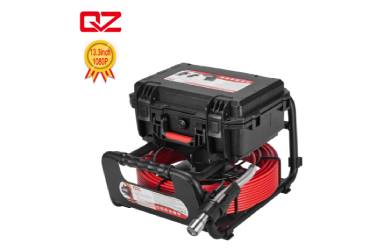
Once the line and equipment are ready, the camera is introduced into the pipe and pushed forward gradually.
A sewer camera is typically advanced by hand using steady pressure. The technician watches the screen while feeding the rod or cable forward. Progress must be controlled. Pushing too quickly can skip over defects, and pushing too hard can make it difficult to pass turns safely.
The inspection is interactive. The technician does not simply push the sewer drain camera forward continuously. They adjust speed, angle, and pressure depending on the video image. If the camera reaches a bend, a branch, or a rough section of pipe, the operator may pause, rotate slightly, and continue with care.
Straight, larger-diameter lines are usually easier to inspect. Smaller branches, multiple elbows, and rough or damaged interiors make camera travel more difficult. That is why inspection technique matters as much as the equipment itself.
The real work of the inspection happens on the screen. The operator studies the live video to determine what condition the line is in.
A sewer camera can clearly show blockages caused by grease, sludge, wipes, paper, solid debris, and foreign objects. The technician checks how severe the obstruction is, whether water can pass, and whether the blockage is likely to return.
Tree roots are one of the most common sewer line issues. A sewer drain camera can show roots entering through joints, cracks, or weak pipe sections. This helps determine whether cleaning alone is enough or whether structural repair is needed.
The inspection may also reveal cracked walls, offset joints, corrosion, holes, sagging sections, or complete collapse. These findings are especially important because they change the repair strategy significantly. A line with structural damage cannot be treated the same way as a simple blockage.
Even when there is no emergency failure, a sewer camera can show age-related deterioration such as scale buildup, surface wear, repeated root entry points, or poor alignment. These signs help property owners plan future maintenance before a serious failure occurs.
A professional sewer camera inspection usually includes some form of documentation, especially when repairs are being considered.
Many systems allow the operator to save footage from the sewer drain camera. This makes it possible to review the inspection later, show the customer exactly what was found, or use the material in a service report.
If the system includes a meter counter or locator, the operator can note where a defect is found. This is extremely useful when excavation, spot repair, or trenchless rehabilitation is planned. A sewer camera inspection becomes much more actionable when the problem is not only seen, but also measured and located.
A proper inspection leads to a recommendation based on visible conditions. The footage helps support whether the line should be cleaned, repaired, relined, monitored, or replaced.
Once the target area has been inspected, the camera is withdrawn and the equipment is cleaned. But the job is not complete until the findings are reviewed and explained.
The sewer camera is usually pulled back slowly. In many cases, the technician continues watching the screen during withdrawal because some areas may appear differently from the reverse direction.
Because a sewer drain camera works in contaminated environments, cleaning after every use is essential. The lens, camera head, cable, and frame should be wiped down and inspected for wear so the system is ready for the next job.
The final step is explaining what the camera showed. A useful inspection is not just raw footage. It is a clear understanding of what condition the pipe is in and what should happen next.
The time depends on the size of the system, the condition of the line, and the complexity of access. A straightforward residential inspection may be completed quickly, while a long or badly obstructed line may take more time.
If access is easy and the line is relatively clear, a sewer camera can travel quickly and provide immediate information.
A sewer drain camera inspection takes longer when the line has heavy debris, many bends, multiple branches, or uncertain routing. Slower work is often better because it reduces missed defects and improves accuracy.
The biggest benefit of sewer camera inspection is that it replaces uncertainty with direct visual evidence. That improves decision-making at every stage.
Without a sewer camera, technicians may have to rely on symptoms and assumptions. That can lead to repeated service visits or excavation in the wrong place. Camera inspection reduces that risk.
A sewer drain camera shows whether the issue is local or widespread, temporary or structural. That helps determine the most efficient solution and prevents over-repair or under-repair.
When the cause of a problem can be shown on screen, everyone has a clearer understanding of the situation. That makes communication easier and repair decisions more credible.
The quality of the inspection depends heavily on how well the equipment performs in actual field conditions. Sewer inspection work is not done in ideal environments. Cameras must pass through damp, dirty, uneven, and sometimes narrow pipelines while maintaining clear imaging and dependable operation. If the system is difficult to control, produces unstable video, or lacks durability, the inspection process becomes slower and less reliable. For buyers, importers, and professional users, choosing the right sewer camera means looking beyond basic specifications. A practical sewer drain camera should be designed for real use, with good handling, consistent image output, durable construction, and service support that continues after the sale. QYTeco has more than 16 years of experience in industrial inspection camera systems and sewer drain cleaning tools, and focuses on providing modular, user-oriented, and cost-effective solutions. The company supports global customers with product development, OEM and ODM cooperation, technical communication, and long-term maintenance service. For businesses that value stable supply, practical performance, and professional support, QYTeco aims to be a reliable manufacturing partner rather than simply an equipment seller.
The first step is to understand the drainage problem, inspect the equipment, and choose the most suitable access point for the line that needs to be checked.
Not always. A cleanout is often preferred, but a sewer drain camera can also be inserted through other access points such as a removed toilet, floor drain, vent, or exposed pipe section.
Yes. A sewer camera can help identify cracks, joint offsets, corrosion, sagging sections, and collapsed areas inside the sewer line.
If the line is heavily blocked, the sewer drain camera may not be able to pass through or provide a clear image. Partial cleaning may be necessary to make inspection possible.
After the inspection, the camera is withdrawn, cleaned, and the findings are reviewed. The recorded evidence helps determine whether the line needs cleaning, repair, rehabilitation, or replacement.


