

Views: 0 Author: Site Editor Publish Time: 2026-09-15 Origin: Site


A plumbing contractor may inspect a narrow branch drain in the morning and a long underground sewer line in the afternoon. A conventional single-reel camera can perform well when its camera head and push rod match the job, but one configuration rarely suits every pipe diameter, bend radius, access point, and inspection distance. A Dual Reel Sewer Camera addresses this problem by integrating two inspection configurations into one system. Instead of relying on a single camera-and-cable combination, professionals can select the reel that better matches the actual pipeline. This makes dual-reel technology especially useful for contractors handling varied residential, commercial, drainage, and sewer inspection work.
A Dual Reel Sewer Camera is a sewer inspection camera system that integrates two separate push-rod reels and camera configurations into one equipment platform. Each reel can be configured for a different range of pipe diameters, inspection distances, bend conditions, or access limitations. The operator chooses the reel that better fits the pipeline instead of forcing one camera and one push rod to handle every inspection.
The main advantage is not simply the presence of two cables. A practical dual sewer drain camera system combines camera head size, push-rod diameter, rod length, and flexibility to address different operating conditions. Camera head diameter affects clearance inside the pipe, while push-rod diameter and stiffness influence bend negotiation, pushing force, and practical inspection distance.
For example, QYTeco's QY6688D Compact Dual Reel combines two inspection configurations in one system. Its smaller camera and push rod are designed for narrower pipes and tighter access, while the larger configuration supports wider drainage and sewer lines.
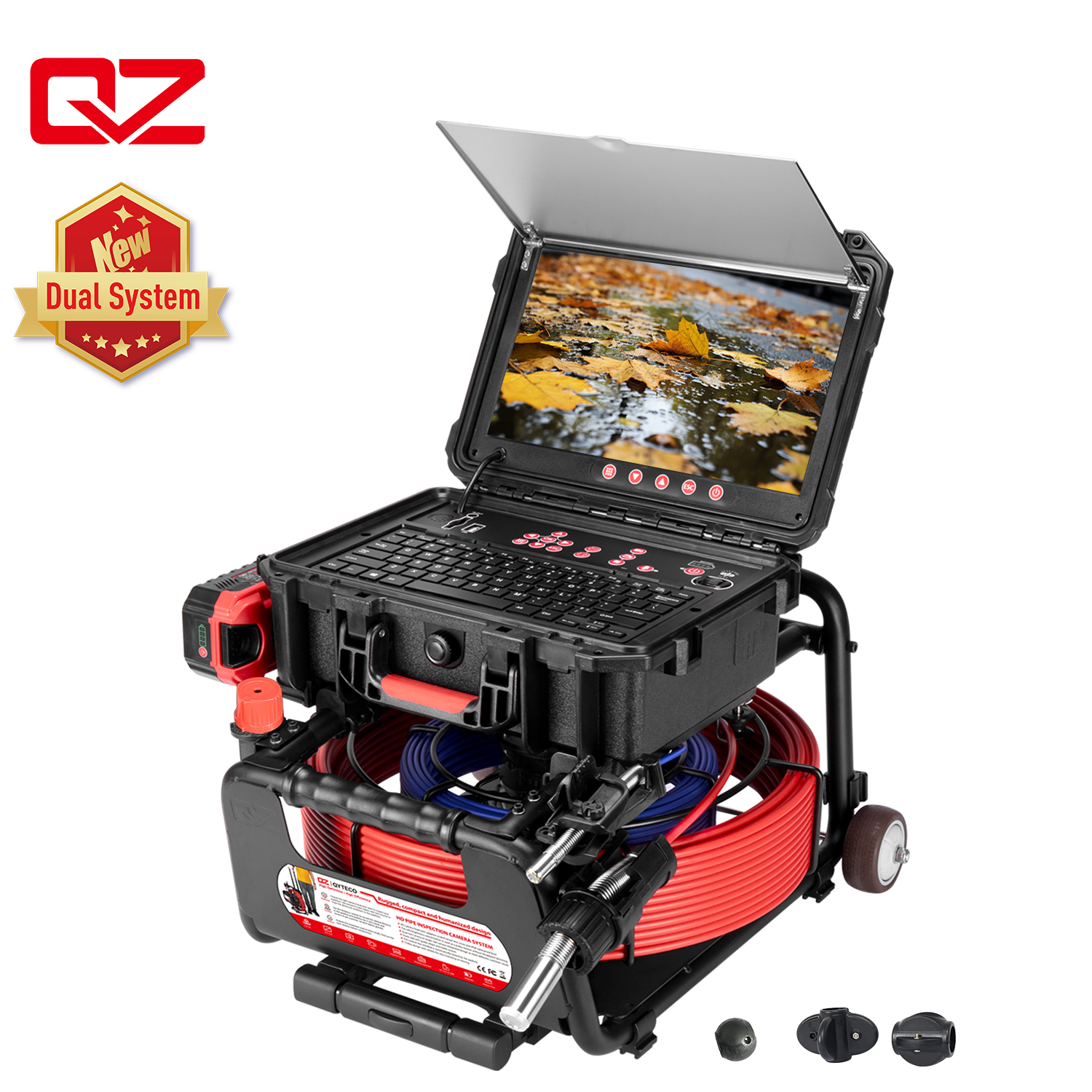
Before inserting a drain inspection camera, the technician should consider the smallest internal pipe diameter, access opening, expected bends, inspection distance, deposits, and the type of defect being investigated. A smaller camera and thinner rod may be better where maneuverability is the main concern. A larger camera and stronger rod may be more suitable for wider and longer pipelines.
This is important because maximum cable length alone does not determine inspection performance. A relatively stiff push rod may be useful for pushing over distance but difficult to guide through tight bends. A highly flexible rod may pass elbows more easily but become harder to advance through a long horizontal sewer. A professional sewer camera therefore needs an appropriate balance between camera size, push-rod flexibility, pushing strength, and inspection distance.
Traditional professional sewer cameras normally use one reel, one installed push rod, and one primary camera configuration. They remain practical for contractors whose work stays within a predictable range of pipe diameters and inspection distances. A Dual Reel Sewer Camera becomes more useful when daily jobs regularly shift between narrow drains, larger pipes, tight bends, and longer sewer runs.
Comparison Point | Dual Reel Sewer Camera | Traditional Single-Reel Camera |
|---|---|---|
Camera configurations | Two camera and push-rod combinations are integrated into one system. | One main camera and reel configuration is normally available at a time. |
Pipe-size adaptability | Suitable for businesses regularly inspecting several pipe-size ranges. | Suitable when most jobs fall within a consistent pipe-size range. |
Bend versus reach | The operator can choose a more flexible reel for tighter routes or a stronger reel for longer runs. | One push rod must balance maneuverability and pushing strength. |
Jobsite equipment | Can reduce the need to transport two complete camera systems. | A second system may be required for substantially different inspection conditions. |
Selection flexibility | The operator can match the reel to the pipe before inspection begins. | The installed camera configuration determines the practical working range. |
Typical users | Contractors handling mixed residential, commercial, drainage, and sewer work. | Users performing repetitive inspections under similar conditions. |
Maintenance | Two reels, camera heads, and push rods require cleaning and inspection. | Fewer components need routine maintenance. |
A dual-reel system should not automatically be considered better for every buyer. If most inspections involve one predictable pipe size and similar access conditions, a single-reel CCTV pipe inspection camera may remain the more economical choice. The value of a dual-reel design increases when technicians repeatedly encounter jobs that require substantially different camera sizes, push-rod characteristics, or working distances.
The application capability of a Dual Reel Sewer Camera comes from its ability to adapt to different pipeline conditions. Depending on the selected camera configuration and accessible pipe route, a sewer inspection camera can help identify visible blockages, deposits, root intrusion, displaced joints, cracks, deformation, foreign objects, and other internal conditions.
Residential plumbing systems often contain several pipe sizes within the same property. Kitchen drains, bathroom lines, basement drainage, and building sewer laterals can differ considerably in diameter and route complexity. A smaller camera configuration can be useful for narrower branch drains, while the second reel can support inspection of larger downstream sections.
Commercial properties may contain branch drains, horizontal collectors, and underground discharge lines. A plumbing contractor working in restaurants, offices, apartment buildings, schools, or retail facilities may therefore encounter several pipe conditions during one service visit. A dual-reel professional sewer camera allows the technician to select a more appropriate camera and push rod for each section.
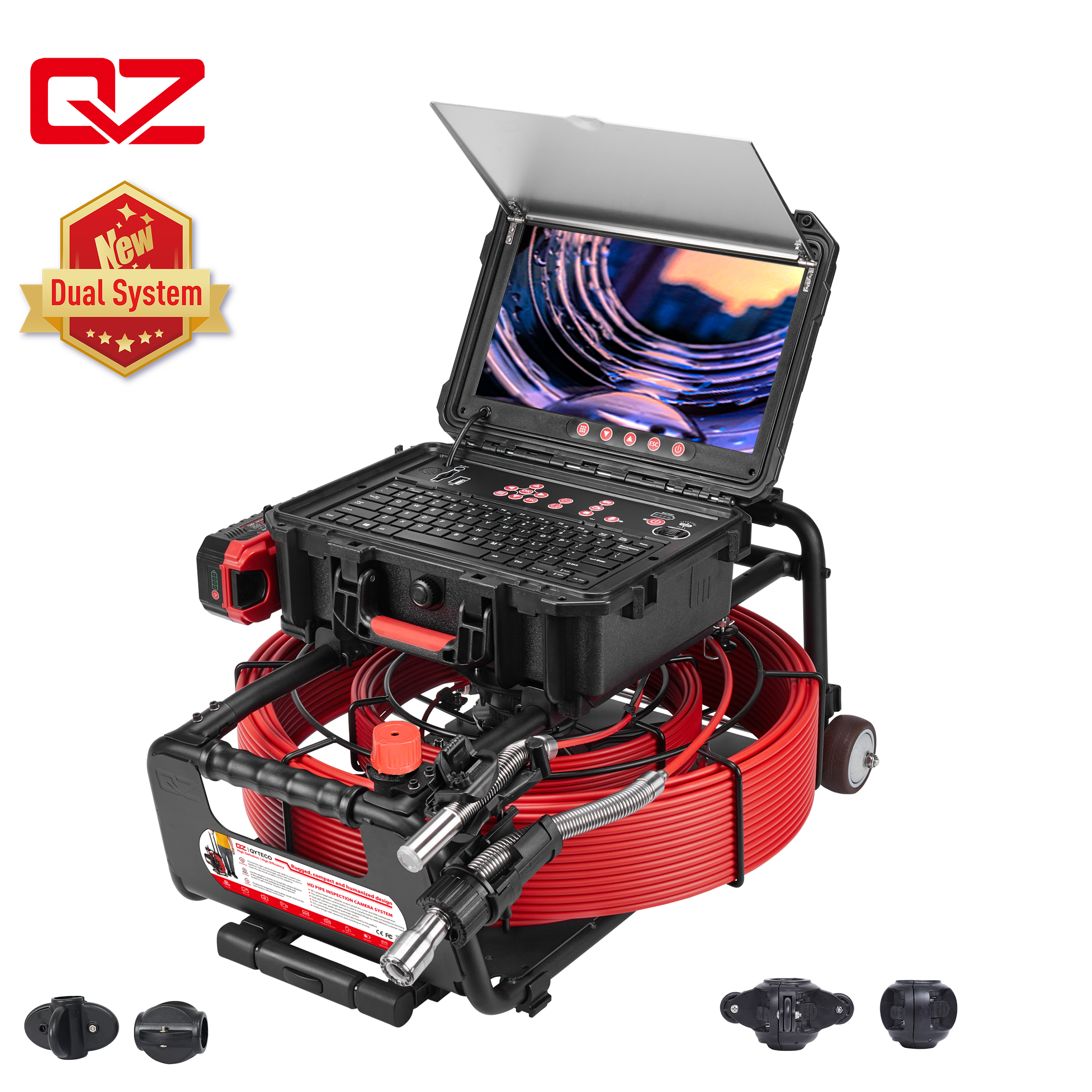
Long underground sewer laterals create different demands from compact indoor drains. Camera clearance, rod stiffness, friction, bends, and inspection distance all affect whether the camera can reach the required location. A larger reel with a stronger push rod can be more suitable for these routes than a highly flexible small-diameter rod.
A drain inspection camera can be used before cleaning to determine the visible nature and approximate position of an obstruction. After cleaning, the same line can be inspected again to check whether deposits or visible obstructions remain. This allows the operator to compare pipe condition before and after the maintenance work.
Where the selected camera configuration includes a compatible locating transmitter, the camera position can be referenced from above ground using a matching receiver. This can support repair planning when the inspection identifies a damaged section that may require excavation or further investigation.
The length of deployed push rod should not be treated as an exact underground position. Pipe bends, route changes, and cable behavior can create a difference between cable distance and the actual surface location of the camera.
A CCTV pipe inspection camera can also help contractors document visible internal conditions for maintenance records, property management, service reporting, or repair planning. Where recording is required, buyers should confirm the exact video and image storage functions of the selected system before purchase.
A contractor is called to investigate slow drainage inside a residential property. The initial access point leads into a relatively narrow pipe containing several bends. A compact camera head and more flexible push rod are selected for this section.
The inspection later moves to the larger building sewer through a separate cleanout. Because the second route has a wider diameter and longer distance, the operator changes to the larger reel. The job can therefore be completed with one integrated plumbing inspection equipment platform instead of transporting two separate camera systems.
A commercial property has smaller fixture branches connected to larger horizontal drainage lines. Using only a large camera may make some branch lines inaccessible, while using only a compact camera may not provide the most suitable configuration for the larger downstream route.
A dual-reel system allows the operator to select the smaller setup for restricted sections and the larger setup for wider pipes. This approach avoids treating the entire drainage network as if every pipe had the same diameter and bend conditions.
A property experiences repeated sewer backups after cleaning. A camera inspection is performed to determine whether the problem is associated with visible deposits, root intrusion, joint displacement, structural damage, or another observable obstruction.
If the selected camera head includes a compatible locating function, the operator can also reference the camera position from above ground. This information can help the repair team investigate a specific section rather than relying only on the total amount of push rod inserted into the pipe.
A long buried sewer route requires more than a small camera head. The push rod must also provide enough support to continue moving forward as friction increases. For these applications, a configuration with a larger camera and longer, stronger push rod may be more suitable.
QYTeco's QY6689D Long-Range Dual Reel combines two reel configurations to address medium-diameter pipe inspection and longer sewer inspection requirements within one system.
Buying a sewer inspection camera based only on screen resolution or maximum cable length can lead to poor equipment matching. A camera that cannot pass through the narrowest pipe, negotiate critical bends, or reach the inspection area will not solve the job effectively. Several specifications should therefore be considered together.
Start with the narrowest section the camera must pass through, not simply the diameter of the cleanout. Reducers, offsets, elbows, deposits, deformation, and fittings may reduce usable clearance. The outside dimensions of the complete camera assembly, including springs and skids, should be considered.
A thinner push rod generally provides greater flexibility for smaller pipes and tighter routes. A larger push rod can provide more pushing support over longer runs. However, neither characteristic should be evaluated separately. Pipe diameter, bend count, camera size, rod length, and friction all affect practical performance.
A Dual Reel Sewer Camera provides the greatest value when the second reel addresses a recurring inspection requirement. Buyers can review previous jobs and identify how often an existing camera has been too large, too small, too short, too flexible, or too difficult to push.
If those limitations occur frequently, a dual-reel configuration may reduce equipment changes and improve jobsite flexibility. If they occur only rarely, a well-matched single-reel camera may still be sufficient.
Locating functions can be useful when the technician needs to reference the camera position from above ground. Self-leveling can keep the image orientation upright while the camera rotates inside the pipe. Buyers should confirm whether these functions are included or optional for the exact camera head and reel configuration being ordered.
In a larger sewer line, a camera traveling along the bottom of the pipe may sit close to sediment or standing water. A correctly sized skid can raise and stabilize the camera to improve its position inside the pipe. However, a skid also increases the effective outside diameter of the camera assembly, so adequate clearance is required.
A Dual Reel Sewer Camera is particularly useful when professional inspection work covers different pipe diameters, access conditions, bend patterns, and inspection distances. Its main advantage is not simply having two reels, but giving the operator two camera and push-rod configurations that can be matched to different pipelines. Buyers should compare camera diameter, pipe clearance, rod flexibility, pushing strength, inspection distance, locating requirements, and maintenance needs as one complete system. QYTeco manufactures and supplies industrial inspection cameras and sewer drain camera systems for professional pipe inspection applications.
A Dual Reel Sewer Camera is a sewer inspection system that integrates two separate camera and push-rod configurations into one platform. The two reels can serve different pipe diameters, inspection distances, or bend conditions, allowing the operator to choose the configuration that better matches each job.
Not in every situation. A dual-reel camera is particularly useful for contractors who regularly inspect several pipe sizes or switch between compact drains and longer sewer lines. A single-reel camera may be simpler and more economical when most work involves similar pipe conditions.
Different push-rod diameters provide different balances between flexibility and pushing support. A thinner rod can help with tighter routes, while a larger rod can be more suitable for longer runs. The correct choice also depends on camera size, pipe diameter, bends, and inspection distance.
A camera head equipped with a compatible locating transmitter can be used with a matching receiver to help reference its position from above ground. The camera image identifies visible conditions inside the pipe, while the locating equipment helps determine where the camera is positioned.
Yes, if the pipe diameters, access conditions, bends, and inspection distances fall within the working range of the selected camera and push rod. The main benefit of the dual-reel design is the ability to choose between two configurations for different inspection conditions.
Important specifications include camera head diameter, compatible pipe range, push-rod diameter and length, bend capability, viewing angle, lighting, recording requirements, locating options, self-leveling requirements, reel design, serviceability, and transport conditions. These factors should be evaluated together rather than selecting equipment based on one specification alone.


