

Views: 0 Author: Site Editor Publish Time: 2026-08-17 Origin: Site


What a Sewer Camera Can Detect
Structural Pipe Damage
Blockages, Deposits, and Flow Restrictions
Grade and Leakage Problems
What a Camera Cannot Confirm by Itself
Choosing the Right Camera for Pipe Inspection
FAQ
A slow drain may be caused by grease, roots, a foreign object, a displaced joint, or a much more serious structural failure. Symptoms at the surface rarely identify which problem is actually inside the line. A sewer inspection pipeline camera gives the operator a direct visual path through accessible sections of the pipe, making it possible to distinguish many defects before deciding on cleaning, repair, or further testing.
However, camera footage has limits. The most useful sewer pipeline inspection is not simply about finding something unusual on screen. It is about recognizing what the image indicates, understanding what it cannot prove, and matching the inspection equipment to pipe diameter, distance, bends, deposits, and flow conditions.
A sewer camera can visually identify many structural and maintenance defects, including roots, cracks, fractures, debris, pipe sags, displaced joints, grease, sediment, and other internal abnormalities. Inspection quality still depends on visibility, flow level, image quality, camera positioning, and operator interpretation. CCTV also provides only a visual representation of accessible internal surfaces rather than a complete measurement of pipe-wall or surrounding soil condition.
Pipe Problem | Typical Camera Evidence | Main Inspection Concern |
|---|---|---|
Tree Root Intrusion | Fine roots, strands, or dense root masses | Restricted flow and possible entry through defects |
Pipe Cracks | Visible linear or branching openings | Possible loss of structural integrity |
Pipe Fractures | Larger breaks or separated wall sections | Progression toward failure |
Corrosion | Rough, pitted, deteriorated internal surfaces | Material deterioration |
Blockages | Material partly or completely obstructing the bore | Reduced or stopped flow |
Grease Buildup | Coating or deposits narrowing the pipe | Recurring restriction |
Sediment | Settled solids along the invert | Capacity loss and poor flow |
Pipe Deformation | Oval, flattened, or distorted cross-section | Structural movement |
Joint Displacement | Offset or separated pipe connections | Leakage, snagging, or root-entry potential |
Bellied Pipes | Persistent standing water in a low section | Improper grade or settlement |
Infiltration | Water visibly entering through defects | Groundwater entering the sewer |
Exfiltration | Open defects suggesting possible outward leakage | May require additional confirmation |
Scale Buildup | Hard deposits attached to the wall | Reduced internal diameter |
Foreign Objects | Tools, debris, construction material, or other objects | Obstruction or damage risk |
Collapsed Pipes | Severe deformation, broken sections, or blocked passage | Loss of usable pipe cross-section |
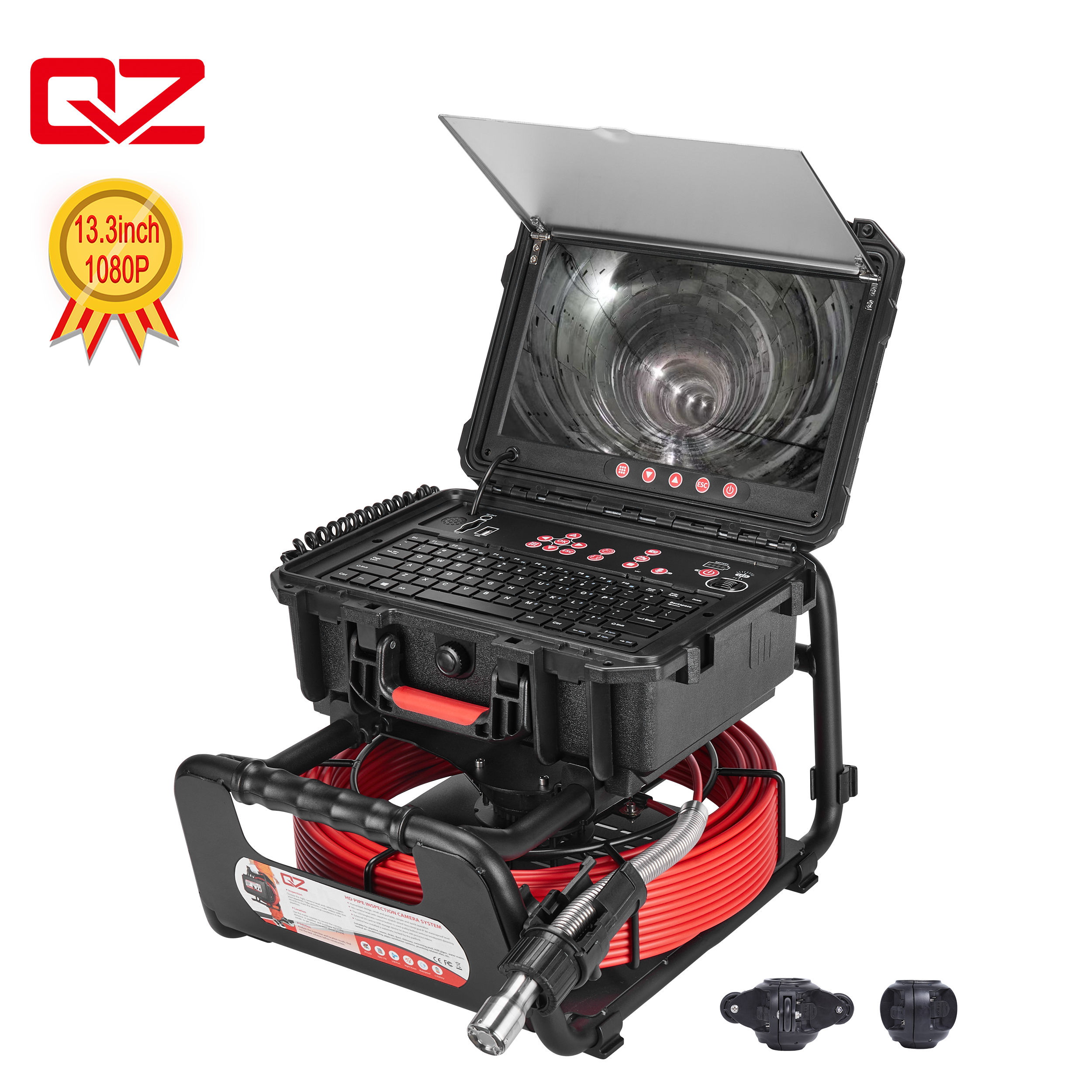
Systems such as the QY6688 Inspection Camera combine a 13.3-inch 1080P display with camera and push-rod configurations intended for different pipe diameters. Camera size and cable characteristics matter because a clear image is useful only if the head can reach the section that needs diagnosis.
Roots often appear as individual fibers at a joint or opening before developing into a dense mass. A sewer inspection pipeline camera can show both the location and visible extent of intrusion. Root growth also deserves closer attention to the surrounding joint or pipe wall because roots may be entering through an existing opening rather than representing an isolated blockage.
Cracks may appear as narrow longitudinal, circumferential, or branching lines on the internal surface. Camera footage helps establish their visible position and distribution, but a two-dimensional image should not be treated as a precise measurement of crack depth or remaining wall strength. Multiple cracks concentrated in one area generally justify closer structural assessment.
A fracture represents more substantial visible separation than a fine crack. The inspection may reveal broken edges, displaced fragments, open gaps, or an irregular pipe profile. The distinction matters because a line that still passes wastewater can nevertheless contain major structural damage. Inspection should record both the damaged area and whether the camera can safely pass it.
Internal corrosion can produce roughness, pitting, flaking, exposed material, or substantial surface deterioration. In a sewer pipeline inspection, these visual changes help identify areas requiring further condition assessment. A camera cannot determine remaining wall thickness from appearance alone, so severe-looking corrosion may require a complementary measurement method before rehabilitation decisions are finalized.
Deformation changes the expected circular pipe profile. An operator may see flattening, ovality, localized distortion, or an obvious reduction in cross-section. CCTV can identify visible deflection, while accurate dimensional assessment may require laser or sonar profiling when the project needs quantitative deformation or diameter measurements.
At a normal connection, adjoining pipe sections should maintain a reasonably continuous internal path. A displaced joint appears offset, separated, or misaligned. The resulting edge can catch debris, interfere with camera travel, provide a location for root entry, and indicate movement around the pipe. Recording the distance to the joint makes subsequent repair planning more useful.
A blockage may occupy only part of the bore or prevent further camera travel completely. Video can distinguish many visible obstruction types and show how much open cross-section remains. A complete obstruction creates an important limitation: the camera can document the near face of the blockage but cannot inspect the inaccessible pipe beyond it until access is restored.
Grease can form coatings, irregular deposits, or thick accumulations that gradually narrow the flow path. Sewer inspection pipeline footage is particularly useful after recurring drain problems because it can separate a deposit problem from structural defects that ordinary cleaning would not correct. CCTV inspection has been shown to identify grease deposits as well as pipe sags and sediment.
Sand, grit, silt, and other settled material commonly collect at the bottom of a gravity line. The camera can show where sediment begins, whether it becomes deeper, and whether it coincides with a low section or another defect. Heavy deposits may conceal the actual pipe surface, so cleaning before a final condition assessment can change what the second inspection reveals.
Scale is typically harder and more firmly attached than loose sediment. It may appear as irregular mineral-like or corrosion-related deposits projecting from the wall. The important inspection question is not only whether scale exists but how much usable diameter remains and whether the deposits prevent the camera from seeing the underlying surface.
A sewer camera can reveal construction debris, tools, displaced components, solid waste, or other objects that should not be in the line. The footage helps determine whether an object is loose, lodged at a joint, or trapped by another problem such as roots or deformation. Camera operators should avoid forcing the head against an obstruction simply to continue the inspection.
A bellied pipe, or sag, is a low section where water and solids can collect. During sewer pipeline inspection, the camera may progressively enter standing water and later emerge as it travels beyond the low point. Repeated submergence over a section can support a sag diagnosis, but video alone does not provide a precise survey of pipe elevation or grade.
Infiltration occurs when groundwater enters the sewer through cracks, defective joints, connections, or other openings. Active water entering the pipe can sometimes be directly visible. Camera inspection is useful for locating defects associated with infiltration, although the appearance and amount of water can change with groundwater and flow conditions.
Exfiltration is wastewater leaving the sewer through a defect. It is usually harder to confirm visually than water actively entering the line. A sewer inspection pipeline camera may reveal an open crack, fracture, displaced joint, or other potential leakage path, but absence of visible outward flow does not prove that the pipe is watertight. Leak-focused testing may be required when confirmation is critical.
A collapsed section is among the most serious findings. Footage may show severe deformation, broken wall material, soil or debris entering the pipe, a drastically reduced cross-section, or a complete loss of passage. Once the camera cannot proceed safely, the inspection should document the accessible failure point rather than risk trapping or damaging the equipment.
A useful sewer pipeline inspection report separates visible evidence from conclusions that require additional data. Standard CCTV is highly effective for recording internal surface conditions, but it does not automatically reveal everything happening within the pipe wall or surrounding ground. Water depth can also hide the invert, while cloudy water, grease, sediment, or debris can conceal defects.
Several findings therefore need careful interpretation:
A crack is not a wall-thickness measurement. Video shows surface appearance but does not quantify remaining structural thickness.
Standing water suggests a grade problem but does not precisely measure slope. Elevation surveying may be needed for design decisions.
A potential leak path is not the same as a measured leak. CCTV can locate cracks and defective joints, while specialized testing may provide stronger leakage confirmation.
Deformation seen on screen is not automatically a percentage of deflection. Projects requiring precise geometry may need laser or sonar profiling.
A clean visible section does not guarantee sound surrounding soil. Standard camera images do not show the external soil envelope supporting the pipeline.
The condition assessment literature identifies picture quality, flow level, and operator interpretation as factors affecting CCTV results. A good sewer inspection pipeline workflow therefore records uncertainty instead of converting every visual clue into an absolute diagnosis.
Detecting defects is partly an imaging problem and partly an access problem. A large camera head may provide a useful view in a larger line but may not negotiate the smaller bends or access points of a narrow drain. A very flexible small-diameter system can handle tighter passages, while longer or larger pipelines may need more push-rod support and additional reach.
QYTeco manufactures and supplies several Sewer Drain Cameras for different pipe inspection conditions. The practical choice should be based on actual pipe diameter, access geometry, inspection distance, bend frequency, visibility, and the location information required for the job.
Inspection Condition | Camera Configuration to Consider | Relevant QYTeco System |
|---|---|---|
Mixed medium and larger pipelines | Two head sizes and two inspection reels for different distances | |
Small access plus larger drain sections | Compact dual system with 12.8mm and 21mm camera heads | |
Narrow drains and tighter access | 12.8mm camera head with a slimmer push rod |
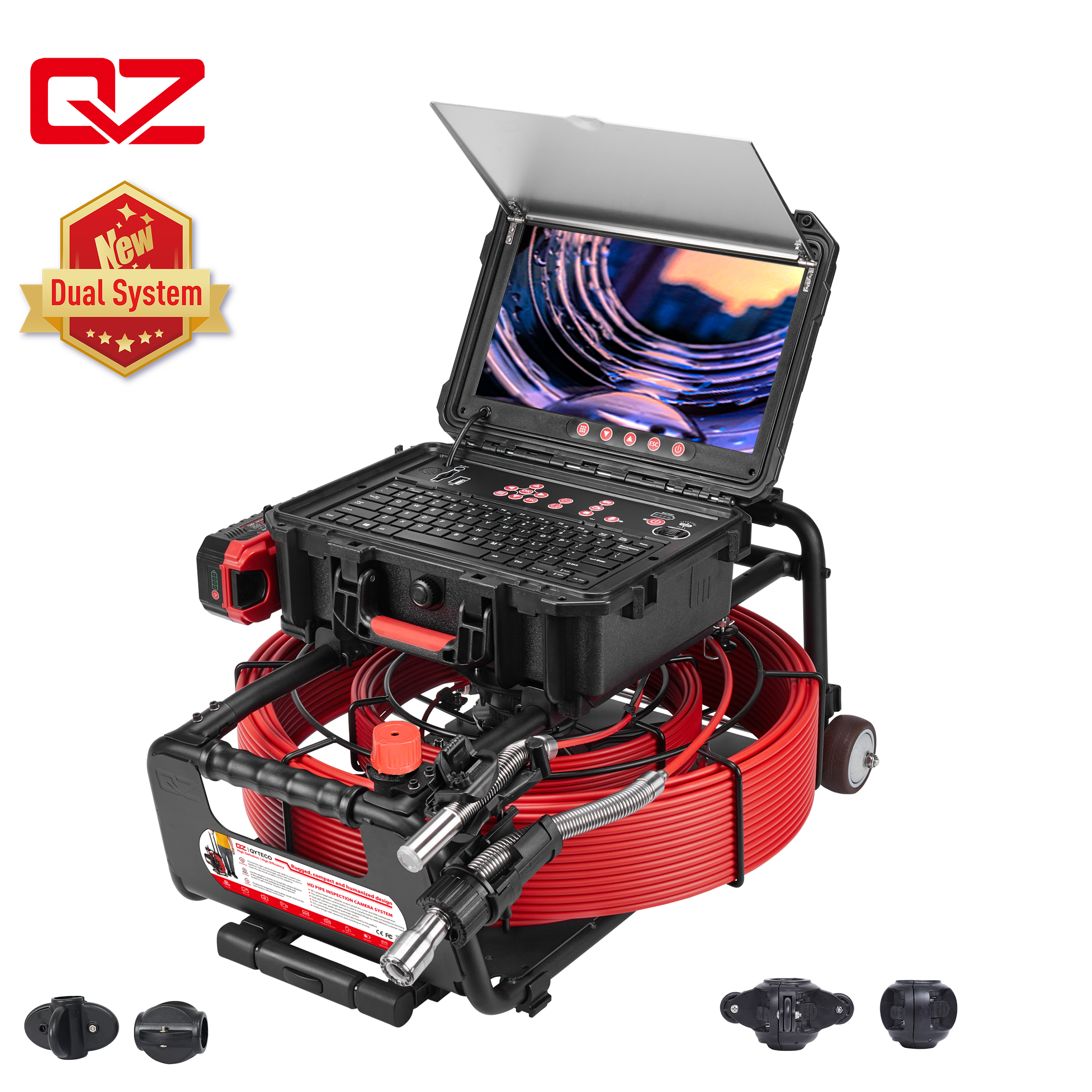
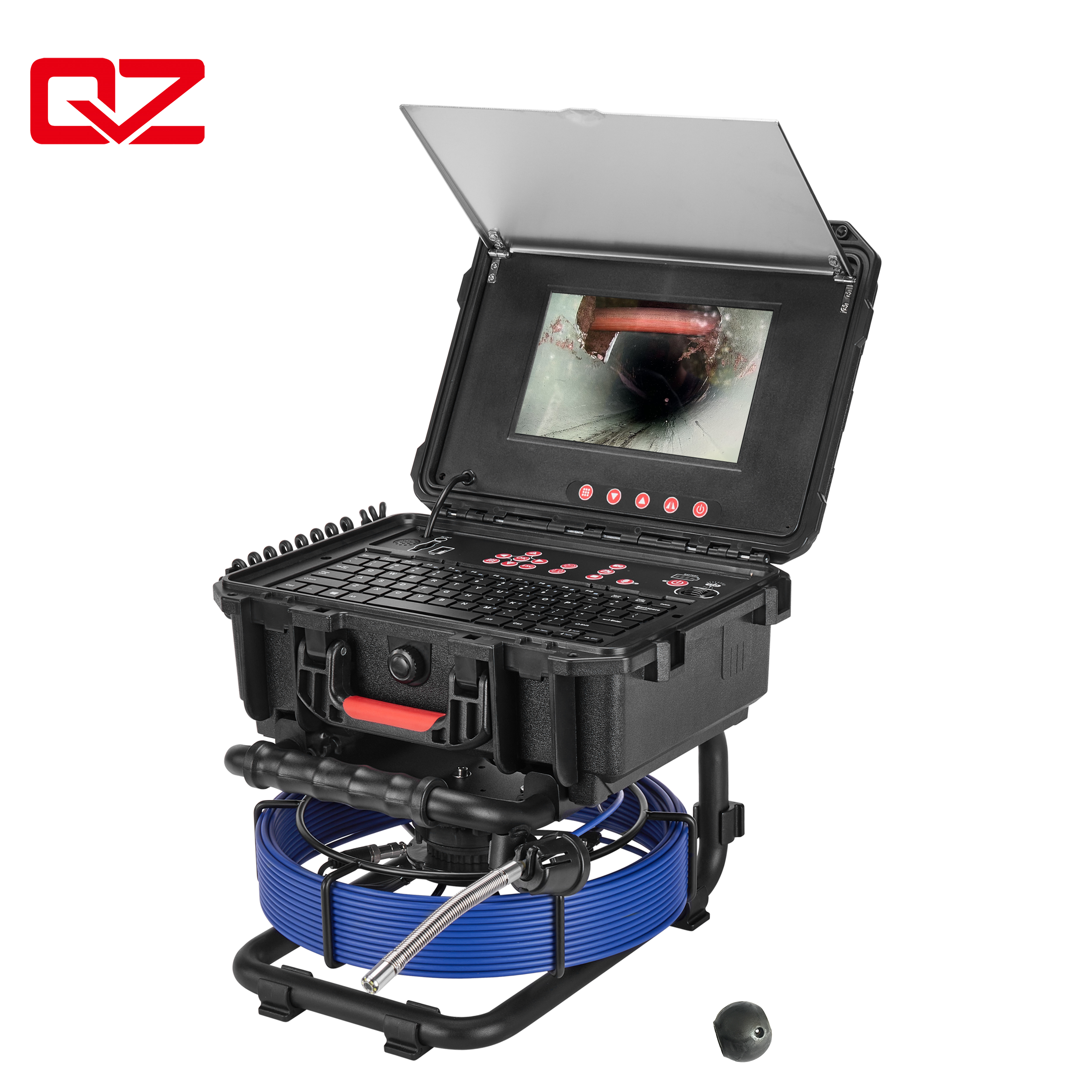
The QY6689D combines 21mm and 29mm heads with separate reels, while the QY6688D combines 12.8mm and 21mm camera heads for jobs requiring small-access and larger-pipe inspection from one system. The QY6566 configuration shown here uses a 12.8mm camera and 4.8mm push rod with a 9-inch display.
Before choosing equipment for a sewer inspection pipeline job, confirm the smallest and largest pipe diameters, total run length, available cleanouts or manholes, expected number of bends, likely obstruction type, and whether above-ground defect location is required. These factors should be considered together. Selecting a system only by screen size or camera resolution can result in equipment that produces a clear image but cannot reach the target section.
For recurring blockage investigations, post-cleaning verification is also valuable. A first camera pass may identify grease, roots, or sediment, while a subsequent inspection after appropriate cleaning can expose cracks, displaced joints, corrosion, or deformation that deposits previously concealed.
A sewer camera can reveal far more than a simple clog. Tree roots, cracks, fractures, corrosion, deformation, displaced joints, bellies, deposits, foreign objects, infiltration, and collapsed sections can all leave visible evidence during sewer pipeline inspection. The strongest diagnosis comes from combining that footage with the pipe's access conditions, flow level, geometry, and the limitations of visual inspection. Shenzhen QYTeco, a manufacturer and supplier of industrial inspection camera systems and sewer drain cleaning tools, offers multiple camera configurations for different pipe sizes and inspection distances. The appropriate system should ultimately be selected around the pipeline being inspected rather than a single equipment specification.
It can detect visible cracks, fractures, displaced joints, active infiltration, and other defects associated with leakage. However, a camera does not always confirm whether wastewater is actively exfiltrating through a defect. Where watertightness is critical, additional leak testing may be appropriate.
A camera can provide strong visual evidence of a belly when it travels through a persistent section of standing water and later emerges. However, footage does not precisely measure pipe elevation or slope. A survey or other measurement method may be required when exact grade information affects the repair design.
It depends on the purpose of the inspection. An initial inspection can document the obstruction itself. If grease, sediment, scale, or debris hides the pipe wall, appropriate cleaning followed by another camera pass may provide a more useful structural assessment.
Not if the camera head cannot safely pass the obstruction. The accessible face and distance of the blockage can still be documented, but the pipe beyond it remains uninspected until another access point is used or the obstruction is removed.
No. Standard sewer CCTV provides visual information about the internal surface. It can locate and record a crack but cannot directly measure its depth or determine the remaining structural wall thickness. More specialized condition-assessment technology may be needed for those measurements.
A smaller camera head and suitably flexible push rod are generally more practical where pipe diameter, access openings, or bends are restrictive. For example, QYTeco offers 12.8mm camera configurations for narrower inspection conditions, while larger camera heads are available for larger pipelines. Final selection should consider both diameter and the complete route the camera must navigate.


